

The cost to install a sewer ejector pump can vary depending on several factors, including the size and type of pump, the complexity of installation, and any additional plumbing or electrical work required. On average, you can expect to pay between $900 and $2000 for the installation of a sewer ejector pump.
This estimate includes the cost of the pump itself, along with any plumbing updates that may be required to install it properly. It also covers the electrical connections needed to operate the pump safely and reliably, plus the labor associated with the work. That said, the total price can vary depending on several practical details. For example, the distance from the pump location to the main sewer line can affect how much piping and labor are involved. The condition of your current plumbing matters too, because older or worn components may need adjustments before installation can be completed. In addition, there may be other property-specific considerations specific to your setup, such as access limitations, layout constraints, or required revisions to ensure the system functions as intended. If you want the most accurate number, it helps to have a qualified plumber evaluate your home or building in person. They can review your existing plumbing, confirm the best placement for the pump, estimate material and labor more precisely, and provide a detailed quote based on the exact scope of the installation.
When it comes to problems with a sewer ejector pump, there are a few common causes to consider. Some of these include:
1. Clogs: The most common cause of problems with sewer ejector pumps is the buildup of debris, grease, and other substances that can clog the pump or its pipes. This can obstruct the flow of wastewater and potentially lead to pump failure.
2. Power issues: Sewer ejector pumps rely on electricity to function. Electrical problems, such as a tripped circuit breaker or a faulty motor, can cause the pump to stop working or experience reduced performance.
3. Float switch malfunctions: Sewer ejector pumps typically have a float switch that senses the level of wastewater in the pump basin. If the float switch is not operating correctly, it may fail to activate the pump or cause it to run continuously, leading to potential issues.
4. Mechanical failures: Over time, various mechanical components of the sewer ejector pump can wear out or break. For example, impellers can become damaged or worn, resulting in reduced pumping capacity or failure.
5. Incorrect installation or sizing: If the sewer ejector pump is installed improperly or its capacity is not properly matched to the demands of the system, it can result in operational issues. This can include issues with pump cycling, inadequate pumping capacity, or premature wear and tear.
It's important to regularly inspect and maintain your sewer ejector pump to prevent these common problems. If you're experiencing difficulties, it may be necessary to consult a professional plumber or technician for proper troubleshooting and repair.
WHAT IS A SEWER EJECTOR PUMP — AND WHY YOUR HOME MIGHT NEED ONE
Unlike a sump pump, which only removes clear groundwater, a sewer ejector pump handles wastewater and sewage from plumbing fixtures — toilets, sinks, showers, laundry — that are located below your home's main sewer line. This is a common situation in finished basements with a bathroom, laundry room, or wet bar, where gravity alone can't move waste up and out to the municipal sewer or septic system. The ejector pump collects wastewater in a sealed basin and actively pumps it up and out, making below-grade plumbing possible in the first place.
WARNING SIGNS THAT SHOULDN'T BE IGNORED
Beyond the common problems listed above, watch for these signs your ejector pump needs attention:
- Sewage odors in your basement — often the first sign of a sealing or venting issue, or a pump that isn't keeping up with demand
- Gurgling sounds from basement drains — can indicate air is trapped in the system due to a venting problem
- Slow draining basement fixtures — a warning sign before a full backup occurs
- The pump running much more frequently than usual — may indicate a leak somewhere in the system, or a failing check valve allowing wastewater to flow back into the basin after each cycle
If you notice sewage backing up into your basement fixtures, this is a plumbing emergency — shut off use of affected fixtures and call for immediate service, since sewage backup poses a genuine health hazard beyond the property damage involved.
WHY PROPER SIZING MATTERS MORE THAN WITH A SUMP PUMP
Because ejector pumps handle solid waste (not just clear water), they're built with different impeller designs and solids-handling capacity — typically rated to pass at least 2" solids without clogging. Correct sizing depends on:
- The number of fixtures connected to the system
- The vertical distance ("head") the pump needs to lift wastewater to reach the main sewer line
- The sealed basin size, which needs adequate capacity to handle wastewater volume between pump cycles
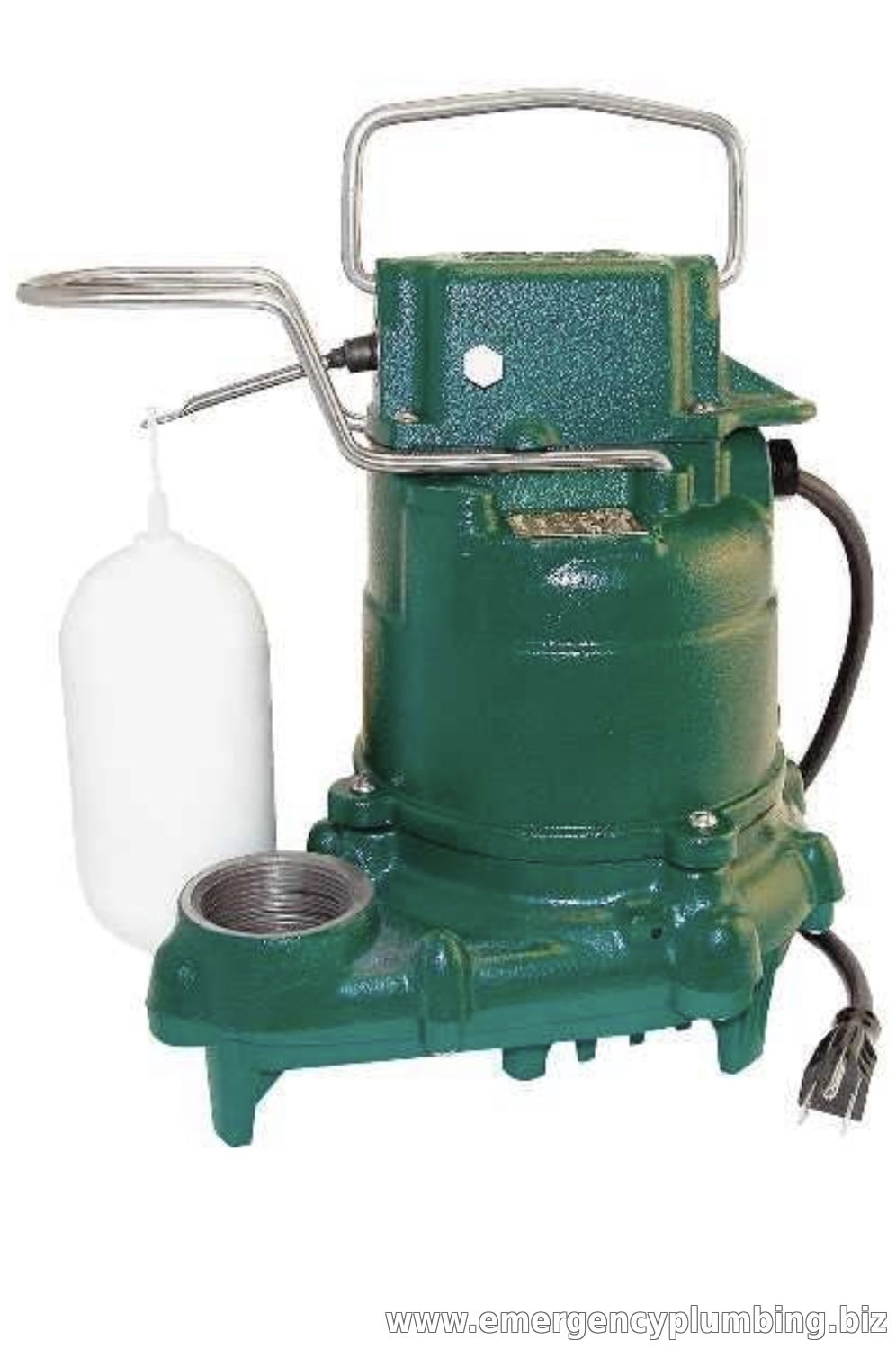
Our ejector pump product lineup includes options like the Zoeller M264 (4/10 HP) for standard single-bathroom applications and the higher-capacity Zoeller M267 (1/2 HP) for greater lift distance or higher fixture demand.
PLUMBING CODE REQUIREMENTS FOR EJECTOR SYSTEMS
Unlike a simple sump pump installation, ejector pump systems typically require:
- A fully sealed, vented basin to contain sewage odors and maintain proper system pressure
- A check valve on the discharge line to prevent wastewater from flowing back into the basin
- Compliance with local plumbing codes governing basin sizing, venting, and discharge connection — professional installation helps ensure your system meets these requirements from the start
Frequently Asked Questions
Can I use a regular sump pump instead of an ejector pump to save money?
No — sump pumps aren't designed to handle solid waste and will clog or fail quickly if used for sewage; this also typically violates plumbing code, since ejector systems have specific sealed basin and venting requirements sump pumps don't meet.
How often should an ejector pump be inspected?
Annual inspection is recommended to check the float switch, check valve, and venting — catching wear before it leads to a sewage backup, which is a more serious failure mode than a typical sump pump issue.
What should I do if my basement bathroom starts backing up?
Stop using the affected fixtures immediately and call for emergency service — a sewage backup can pose health risks and cause significant property damage the longer it's left unaddressed.
Signs Your Basement Sewage Ejector Pump Needs Service or Replacement
A sewage ejector pump is critical for pumping solid and liquid waste from basement bathrooms, wet bars, and laundry rooms up to the main municipal sewer line. When an ejector pump fails, raw sewage can quickly back up into your lower level. Call our emergency plumbers at (224) 754-1984 if you experience any of these warning signs:
Sewage Backing Up Into Basement Fixtures: Water or solid waste overflowing from basement toilets, showers, or floor drains.
Foul Sewage Odors Near the Pit: Cracked pit covers, damaged gaskets, or unvented discharge lines allowing dangerous sewer gas (hydrogen sulfide) into your home.
Pump Runs Continuously Without Shutting Off: A stuck float switch caught on solids or pit walls, or a failing motor unable to generate sufficient vertical lift.
Loud Screeching, Grinding, or Humming Noises: Motor bearings wearing out, an impeller jammed by non-flushable items, or a seized motor assembly.
Frequent Tripping of Electrical Breaker: Overloaded motor draw, damaged power cord insulation, or moisture entering the motor housing.
Short Cycling (Turning On and Off Every Few Seconds): Misadjusted switch levels or a failing check valve allowing pumped waste to flow straight back into the basin.
Understanding Your Sewage Ejector Pump System
Unlike clean-water sump pumps, sewage ejector systems handle up to 2-inch solid waste and operate inside airtight, gas-sealed basins:
Component Purpose & Function Common Failure Symptoms Submersible Ejector Motor Heavy-duty cast iron pump equipped with a vortex or non-clog impeller capable of passing solids up to 2". Motor burnout caused by dry running, thermal overload, or blocked suction ports. Sealed Pit Cover & Gaskets Gas-tight cover bolted to the basin with rubber seals around discharge, vent, and power cords. Cracked plastic covers or degraded rubber seals leaking foul odors into the basement. Venting Pipe (2" PVC) Connects the sealed pit directly to your home's main roof stack to vent gases and equalize pressure. Clogged or missing vent lines causing slow drainage and siphon gurgling. Heavy-Duty Check Valve 2-inch full-flow check valve installed on the discharge pipe to prevent backflow of raw sewage into the pit. Loud thumping sounds or sewage returning to the pit after cycle ends.
Sewage Ejector & Grinder Pump Solutions We Install
We supply, service, and replace residential and commercial sewage ejection systems from industry-leading manufacturers, including Zoeller, Liberty Pumps, Saniflo, and Hydromatic:
Standard Sewage Ejector Pumps (1/2 HP to 1 HP): High-flow cast iron pumps designed to handle up to 2-inch spherical solids for standard basement bathrooms and laundry suites.
Heavy-Duty Grinder Pumps: Equipped with stainless steel cutter blades that shred tough solids, feminine hygiene products, and wipes into a fine slurry before pumping across long distances or steep inclines.
Upflush Toilet Systems (Macerating Pumps): Compact, above-floor units (e.g., Saniflo) ideal for adding a basement bathroom without jackhammering concrete floor slabs.
Dual Sewage Pump Systems (Duplex Pumping): Commercial-grade twin-pump basins that alternate operation and automatically activate the second pump during high-demand peak usage.
Our Step-by-Step Sewage Ejector Pump Replacement Process
Safe Basin Decontamination & Inspection: Safely pumping out residual sewage, neutralizing the basin, and inspecting pit walls and floor elevation.
Pump Seating & Impeller Alignment: Placing the new cast iron pump on an elevated base in the basin to keep it clear of heavy settling sediment.
Heavy-Duty Discharge & Vent Piping: Assembling 2-inch Schedule 40 PVC discharge pipes, connecting the dedicated 2-inch vent stack, and installing a rubber-cushioned silent check valve.
Gas-Tight Cover Sealing: Fitting a heavy-duty lid with fresh rubber grommets around all pipe penetrations and power cords to guarantee a 100% odor-free seal.
Testing & Cycle Calibration: Filling the pit with water, testing float switch differential levels, verifying amperage draw, and testing under full fixture discharge conditions.
Frequently Asked Questions: Sewage Ejector Pump Services
Q: What is the main difference between a sump pump and a sewage ejector pump?
A: A sump pump handles clean groundwater or rainwater collecting around your foundation and pumps it outside. A sewage ejector pump handles human waste and drain discharge from below-grade toilets, sinks, and washing machines, pumping it directly into the municipal sanitary sewer line.
Q: How much does sewage ejector pump replacement cost in Illinois?
A: Replacing a standard 1/2 HP sewage ejector pump typically costs between $750 and $1,450, depending on basin access and piping requirements. Heavy-duty grinder pump installations range from $1,800 to $3,200.
Q: How long do sewage ejector pumps usually last?
A: With proper maintenance and avoiding non-flushable items, a quality cast iron sewage ejector pump lasts between 7 and 12 years.
Q: Can flushable wipes be used with a standard sewage ejector pump?
A: No. Despite manufacturer labeling, "flushable" wipes do not break down in water and frequently bind around standard ejector impellers. Only install a heavy-duty gr
With multiple locations throughout North Shore and Northwest suburbs of Chicago, Illinois, Emergency Plumbing offers promt and professional plumbing services.
Are you looking for a reliable plumber near me in the Arlington Heights, Bannockburn, Barrington, or surrounding areas?
Our local plumbing company offers expert services, catering to all your needs. Whether you're in the heart of Buffalo Grove, the serene streets of Deerfield, or require an emergency plumber in Des Plaines or Elk Grove Village, we are here to help. Our plumbing contractors are well-versed in the unique plumbing systems of Glencoe, Glenview, Hawthorn Woods, and Highland Park.
For those in Highwood, Hoffman Estates, or the quaint town of India Creek, our team guarantees prompt and efficient service.
Residents of Inverness, Kildeer, Lake Bluff, Lake Forest, and Lake Zurich can also rely on our expertise. We extend our services to Long Grove, Mettawa, Lincolnshire, Mount Prospect, Mundelein, Northbrook, and Palatine.
Need a plumber in Prospect Heights, Ravinia, RiverWoods, Rolling Meadows, Vernon Hills, Wauconda, Wheeling, Wilmette, or Winnetka? Look no further! As a trusted plumbing contractor, we ensure that your plumbing issues are solved quickly and efficiently, keeping your home or business running smoothly.