


11:54 PM Bathtub Refinishing vs. Replacement: Financial Guide | |
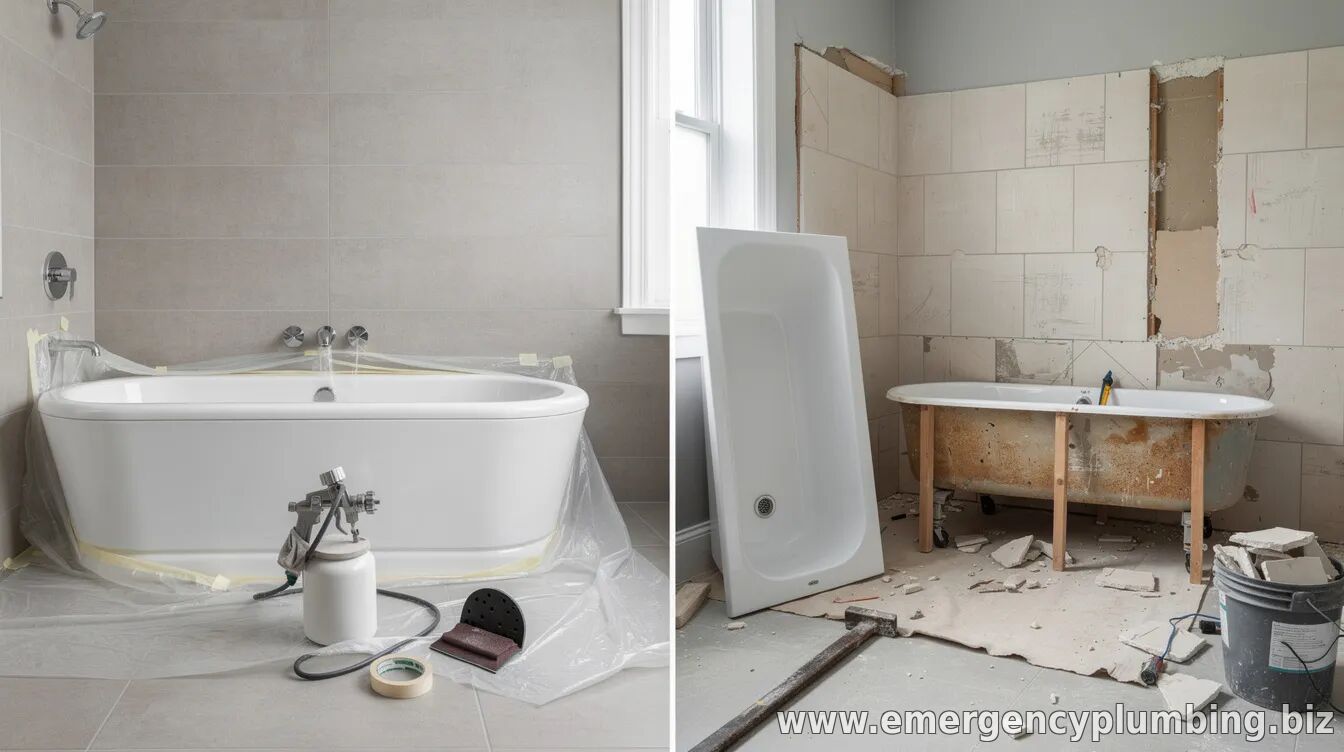
Homeowners facing a worn, stained, or scratched bathtub typically weigh two routes: refinishing (sometimes called reglazing or resurfacing) or replacement. While replacement can be the most transformative option, refinishing is often the better financial move when the tub’s core condition is still good.
Financial sense isn’t only about the lowest price quote. It’s also about labor time, disruption to your home, likelihood of needing future repairs, and how closely the final result meets your expectations. 1) Upfront costs: refinishing usually wins
Refinishing generally costs less than replacement because it focuses on restoring the existing tub surface rather than removing plumbing fixtures, demolition materials, and the entire unit. If your tub isn’t cracked or structurally failing, refinishing can provide a fresh appearance at a fraction of the cost.
Replacement, by contrast, tends to involve higher material and labor expenses. Depending on your bathroom layout, it may also require additional work such as updating surrounding tile, addressing subfloor issues, or correcting plumbing connections. 2) “Hidden” expenses can narrow the gap
Even when refinishing has a clear sticker-price advantage, you should budget for potential add-ons. For example, extensive surface damage may require more prep work, specialty coatings, or multiple steps to achieve a smooth finish.
For replacement, hidden costs commonly include water damage discovered during demolition, re-tiling or wall repair, disposal fees, permit or inspection needs (in some areas), and potential upgrades you might choose when the bathroom is already opened up. These factors can substantially increase the final replacement total. 3) Condition of the tub matters more than aesthetics
Refinishing typically makes the most financial sense when the tub’s foundation is intact—meaning no structural cracks, no significant movement, and minimal issues that affect how the new coating bonds. If the tub is severely corroded, cracked, or has underlying problems, refinishing may be less durable, which can reduce the value of the lower initial cost.
Replacement tends to be the better economic decision when the tub is approaching failure, when corrosion or damage has penetrated deeper layers, or when previous repairs have left the surface unstable. In those cases, refinishing can become a short-term fix rather than a long-term improvement. 4) Time and disruption: a real part of the budget
Refinishing often results in a faster turnaround than replacement because it avoids demolition. Less downtime means fewer inconveniences—like limited access to bathing and additional costs tied to temporary arrangements.
Replacement can take longer due to removal, repairs, installation, and curing or finishing steps. If you rely heavily on that bathroom, or if you can’t easily manage the disruption, the “cost” of delay may push the financial decision further toward refinishing. 5) Durability and resale value: compare expected lifespan, not just price
Cost effectiveness depends on how long the results last. A professional refinishing job—using the correct process, proper surface prep, and quality materials—can deliver strong durability for years. However, longevity varies based on tub type, prep quality, coating system, and maintenance.
Replacement generally provides the longest remaining lifespan because you’re starting fresh with new materials. That said, resale impact depends on the overall condition and styling of the bathroom, not only whether you chose refinishing or replacement.
To gauge value, consider your timeline: if you plan to sell soon, replacement may appeal to buyers looking for “move-in ready” renovations. If you’re staying longer, a high-quality refinishing could be a smart interim upgrade that keeps costs down. How to decide: a practical financial checklist
If you want a straightforward way to compare options, ask these questions when getting quotes:
In many common scenarios—stains, scuffs, minor scratches, and general cosmetic wear—refinishing offers the highest value per dollar. Replacement becomes more financially sensible when the tub is compromised beyond surface-level damage or when bathroom demolition can address multiple issues at once.
Ultimately, the best financial choice is the one that aligns your tub’s condition with your budget and timeline. Ask for itemized estimates, verify the prep process, and choose based on expected long-term performance—not just the initial quote.
| |
⏰ Dispatcher support 24/7
📞 224-754-1984CALL ☎ Subscribe 👆 FORUM 🗣
North Shore, Northwest suburbs of Chicago, IL
Next & Previous posts