


2:12 AM What Excavation for a New Water Line Involves | |
Installing a new municipal or private water line starts long before any equipment reaches the ground. The work typically begins with planning, permitting, and coordination to ensure the pipe route is accurate and safe for crews, property owners, and existing underground utilities.
Most projects begin with a design and a service-plan review that determines the pipe size, route, depth, materials, and connection points (for example, where the line ties into an existing main or where it reaches a building). Engineers also consider local requirements such as frost depth, right-of-way limits, and pressure conditions. 1) Permits, utility locating, and site preparation
Before excavation, contractors usually obtain permits and schedule inspections. They also perform “utility locating” using service locators and field verification to identify gas, electric, telecom, sewer, irrigation, and other buried lines. This step is critical to prevent damage and outages during trenching.
Once the route is confirmed, the site is prepared. That can include traffic control (if work occurs near roads or sidewalks), establishing access for equipment, marking boundaries, and protecting nearby landscaping, fences, and structures. 2) Excavation and trench safety
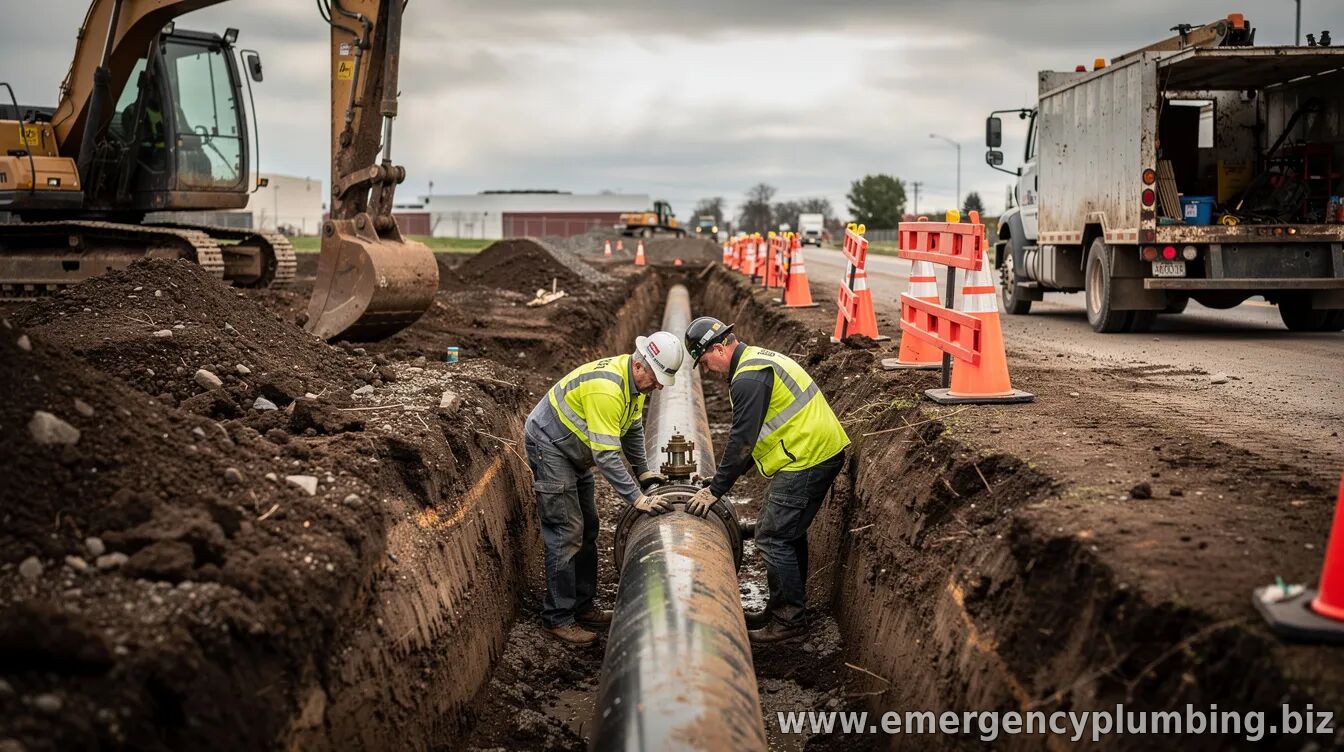
The actual digging is planned around trench safety and soil conditions. Crews typically excavate to a specified depth and width to allow proper bedding and compaction. Depending on local regulations and the type of soil, contractors may use trench boxes/shoring, slope requirements, and dewatering measures.
Contractors often remove unsuitable material and then create a stable foundation for the pipe—commonly using specified bedding materials. The goal is to ensure the pipe has uniform support so it remains aligned and performs under pressure. 3) Pipe installation, connections, and bedding
After the trench is prepared, the new line is laid and joined using the appropriate connection method for the pipe material (such as restrained joints for certain segments). At connection points, crews install fittings and valves required for isolation and service control.
Throughout installation, alignment and grade are checked to ensure proper flow and to avoid low spots that could trap air or create maintenance issues. Once sections are in place, bedding and backfill materials are installed in layers, with controlled compaction to support the pipe and prevent settlement. 4) Testing and inspection before backfilling is finalized
Most water-line projects include pressure testing and leakage checks prior to final restoration. The exact test method and duration depend on jurisdiction and pipe material, but the objective is the same: verify the line can safely deliver water and withstand operating pressures.
Inspections commonly occur at key stages—before pipe is fully covered and again after backfill and restoration. Only after passing tests and receiving approvals does the contractor typically proceed with final grading, surface repairs, and cleanup. 5) Backfilling, surface restoration, and final cleanup
Restoration can be one of the most visible parts of the job. Crews often backfill in stages (not all at once), compacts the layers, and restores topsoil, pavement, curbs, sidewalks, or landscaping to match local standards. Final surfaces may require temporary patching and later “full” restoration, depending on weather and curing times.
Before the project is considered complete, the contractor typically clears debris, reinstates access and drainage where applicable, and confirms that valves, meters, and service connections are functioning as designed.
For property owners, the practical takeaway is to treat excavation as a multi-step system—from utility locating and trench safety to testing and restoration—not a single day of digging. Asking your contractor about permits, inspection checkpoints, testing procedures, and restoration timelines can help ensure the work meets both safety expectations and local water requirements.
| |
⏰ Dispatcher support 24/7
📞 224-754-1984CALL ☎ Subscribe 👆 FORUM 🗣
North Shore, Northwest suburbs of Chicago, IL
Next & Previous posts