

1:19 AM Repair or Replace: How to Choose for Plumbing Parts | |
When a plumbing component fails, the immediate question is usually simple: should you repair it or replace it? The best choice depends on how the failure happened, how close the component is to the end of its service life, and what a future breakdown would cost you.
Below is a decision framework you can use for many plumbing parts—shutoff valves, faucets, toilets, water heaters, pipes, and fixtures—so you can weigh short-term fixes against long-term reliability. Start with the failure pattern
First, consider how the component is failing. A localized issue—such as a worn washer in a faucet or a valve that won’t fully seat—often points toward a repair. But recurring leaks, multiple simultaneous symptoms, or damage caused by corrosion, freezing, or impact can indicate broader system trouble that replacement may better address.
If you’ve repaired the same component more than once recently, that’s a strong signal the underlying wear may be accelerating. In those cases, replacing the part can be more cost-effective than repeatedly paying for short-term fixes. Compare total cost, not just the invoice
Repairs can be the right move when the problem is small and accessible. However, plumbing decisions should factor in total cost: labor time, likelihood of return visits, water damage risk, and any code/compliance implications.
A helpful rule of thumb is to compare the repair cost plus the “expected future risk” against the replacement cost plus the “years of service” you gain. If a repair buys you only a short window of reliability—especially for items tied to water pressure, drainage, or temperature control—replacement often makes financial sense. Assess age and remaining lifespan
Many plumbing components have predictable lifespans. When a part is nearing the end of its typical service life, repairing can become a cycle of maintenance rather than a durable solution. For example, a water heater, older main shutoff valve, or corroded supply line segment may be more reliably handled through replacement before a more disruptive failure occurs.
Age alone isn’t the only factor—installation quality and water conditions matter. Hard water, high mineral content, and corrosive water can shorten lifespans and make repeated repairs less effective. Evaluate risk: leaks, flooding, and access difficulty
Some plumbing repairs are “high consequence.” A small leak under a sink might be manageable, while a failed valve in a concealed area could lead to hidden damage. Similarly, a component that is difficult to access—behind walls, under slabs, or in tight mechanical spaces—may cost much more to repair later if it fails again.
If the consequence of failure is high and the component is hard to reach, replacement becomes more attractive because it reduces the chance of another emergency and additional demolition or rework. Watch for signs replacement is the better bet
Use the following indicators as decision prompts. If several apply, replacement is often the safer, longer-lasting choice.
Consider code, compatibility, and future maintenance
When components are replaced, they can be upgraded to match current standards or improve compatibility with the rest of the system. Repairs may keep older parts in place, which can limit improvements and increase the odds that other aging sections will fail soon after.
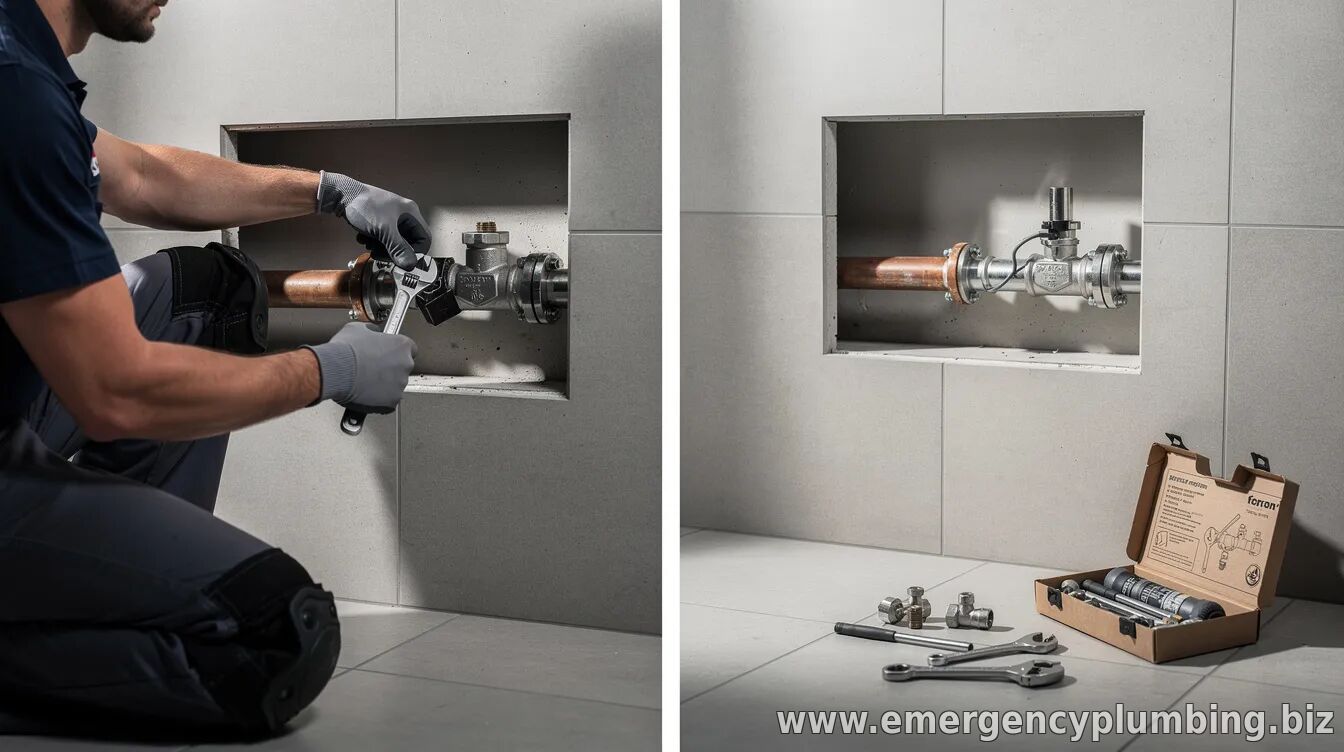
Also consider whether replacement will simplify maintenance. For instance, installing a new shutoff valve can make future plumbing emergencies easier to control, even if the original component didn’t fail in a major way. Make the final decision with a “what if” test
Before choosing repair or replacement, ask: What happens if this fails again? If the likely next failure would cause significant water damage, require expensive access work, or disrupt essential systems, lean toward replacement. If the repair is low-risk, accessible, and likely to restore full performance, repair may be the best first step.
For complex cases—especially involving main lines, water heaters, or concealed piping—consulting a qualified plumber can help confirm the root cause and estimate both short-term and long-term outcomes.
With a clear framework—failure pattern, total cost, component age, access difficulty, and risk—you can make a repair-versus-replace decision that’s both practical and financially sound.
| |
⏰ Dispatcher support 24/7
📞 224-754-1984CALL ☎ Subscribe 👆 FORUM 🗣
North Shore, Northwest suburbs of Chicago, IL
Next & Previous posts