


4:30 AM Smart Water Shutoff Valves: How They Prevent Catastrophic Leaks | ||||||||||||
Water damage is one of the most common and costly disasters a property owner can face. A burst supply line, a pinhole pipe leak, or a failing water heater can dump hundreds of gallons of water into a home within minutes. By the time someone notices standing water, structural timber, drywall, flooring, and personal belongings are often ruined.
Enter Smart Water Shutoff Valves—a proactive line of defense designed to detect plumbing failures instantly and cut off the water supply before a minor leak becomes a major insurance claim. What is a Smart Water Shutoff Valve?
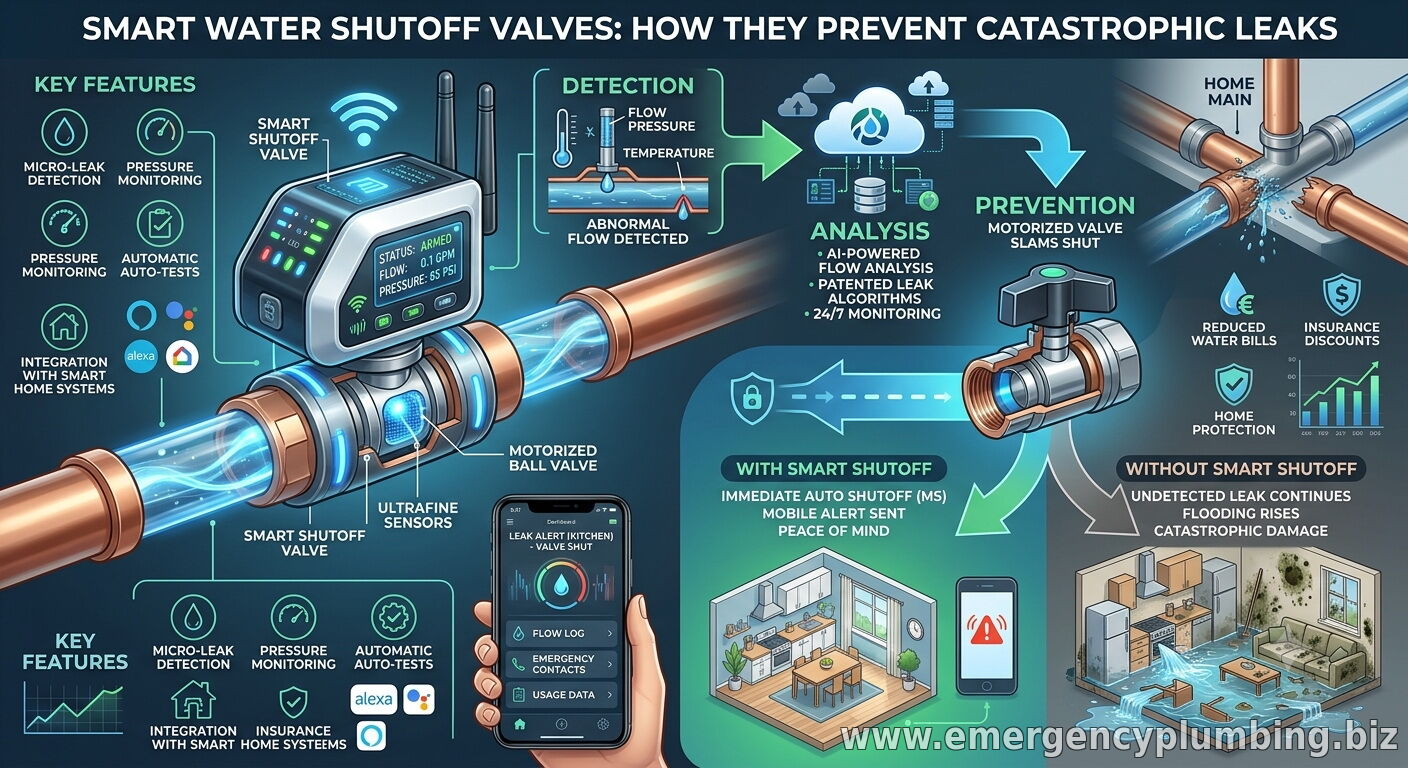
A smart water shutoff valve is a connected device installed directly onto a building's main incoming water line. Combining high-precision flow sensors, temperature monitors, and motorized ball valves, these systems constantly track water movement throughout the plumbing network.
Unlike basic moisture detectors (which only sound an alarm when water hits a specific sensor on the floor), smart valve systems actively intervene by physically turning off the main water line the moment an anomaly is detected. How Smart Shutoff Valves Work: The Technology Breakdown
Smart valves protect properties through a combination of continuous hardware monitoring and intelligent algorithms: 1. Advanced Flow & Pressure Sensing
Modern smart shutoff systems measure flow down to fractional gallons per minute. Many high-end models use ultrasonic or turbine flow sensors to record precisely how much water is moving through the pipes at any given second. 2. Algorithmic Pattern Recognition
Smart valves learn your daily routines. They recognize the typical water fingerprint of a 10-minute shower, a washing machine cycle, or an irrigation system. If water runs continuously for an abnormal length of time—like 45 minutes of high-volume flow at 3:00 AM—the system identifies it as a potential pipe burst. 3. Micro-Leak Testing
Many systems run automated daily pressure tests (often overnight while the household is sleeping). The valve momentarily isolates the plumbing system and monitors for subtle pressure drops. This allows it to detect tiny pinhole leaks or dripping toilets behind walls that would otherwise go unnoticed for months. 4. Automated Physical Shutoff
When a catastrophic pipe burst or continuous leak is detected, the unit's motorized actuator automatically turns the main ball valve, stopping incoming water flow in seconds—even if power or internet access is lost.
Key Benefits of Installing a Smart Shutoff Valve
Whole-Home Systems vs. Point-of-Use Detectors
When designing a leak protection strategy, property owners usually choose between two main configurations:
Best Practice: The most robust defense combines a whole-home main line valve with point-of-use sensors in high-risk zones (like basements and mechanical rooms). SummaryPlumbing infrastructure degrades silently over time, making unexpected leaks a constant risk. By pairing real-time pressure diagnostics with automated physical shutoff capabilities, smart water valves shift plumbing maintenance from reactive property restoration to proactive risk management.
| ||||||||||||
⏰ Dispatcher support 24/7
📞 224-754-1984CALL ☎ Subscribe 👆 FORUM 🗣
North Shore, Northwest suburbs of Chicago, IL
Next & Previous posts