


0:04 AM Salt-Free vs. Traditional Water Softeners: What’s Best? | |
Choosing between a salt-free water softener and a traditional softener is less about marketing claims and more about how your specific water behaves. “Hard water” typically contains calcium and magnesium, which can form scale on heaters, pipes, and fixtures. Different technologies target that scale in different ways—affecting results, upkeep, and long-term performance.
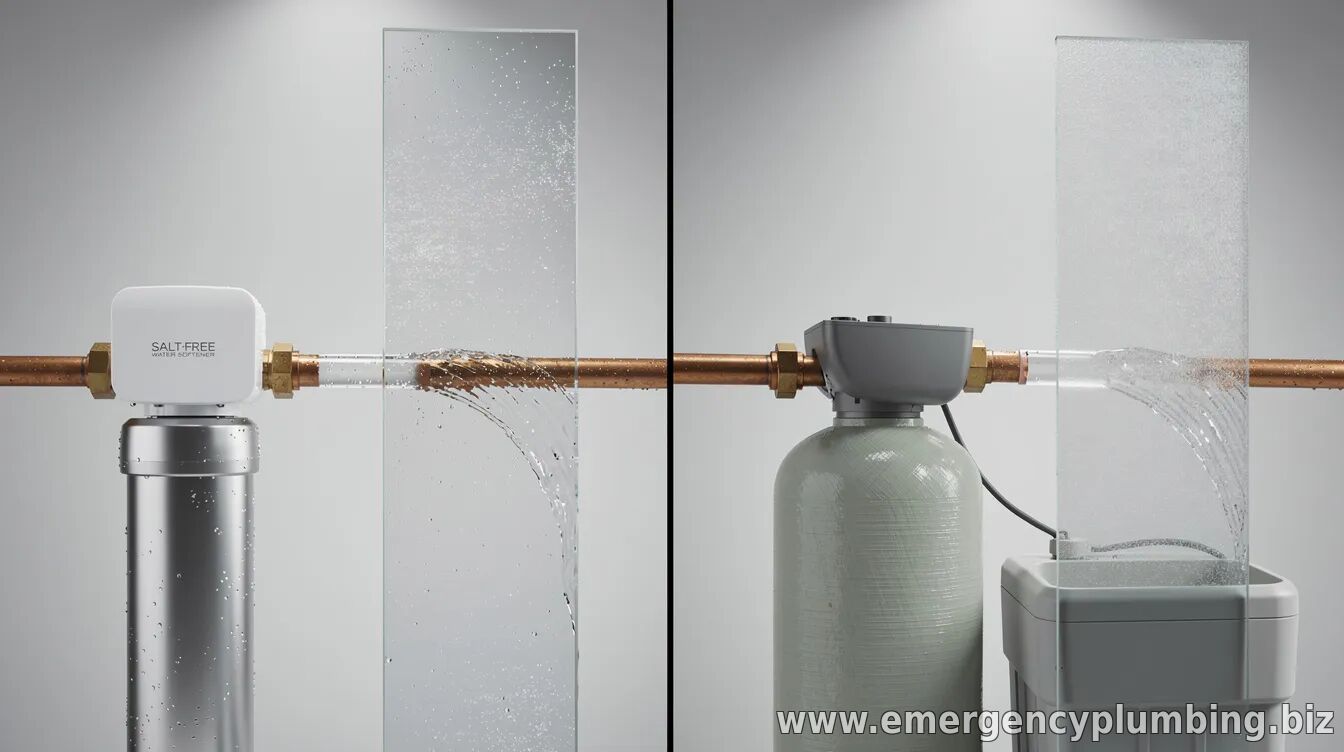
Traditional water softeners use an ion-exchange process and generally replace calcium and magnesium with sodium or potassium. Salt-free systems usually refer to water conditioners that do not remove those minerals; instead, they change how scale-forming minerals behave so deposits are less likely to adhere to surfaces. How they work
A traditional softener relies on resin beads that attract calcium and magnesium ions from water. When the resin becomes saturated, it regenerates using a brine solution made from salt (or sometimes potassium chloride). The outcome is water with far less calcium and magnesium, which reduces scaling potential throughout the home.
Salt-free systems (commonly catalytic media or template-assisted approaches) typically convert calcium and magnesium into forms that are less likely to precipitate as scale. However, because these systems may not remove the minerals, the water can still contain similar levels of hardness—meaning effects on soap efficiency, film on fixtures, and certain stains can vary. What “better” looks like in real homes
Traditional softeners tend to perform best when you want comprehensive hardness reduction—especially for households with severe scaling, older plumbing, or water heaters that are prone to buildup. They are also usually the clearer choice if you’re trying to prevent scale on heat-exchange equipment year-round.
Salt-free conditioners can be a good fit when your main pain point is scale formation and you prefer a system with no routine salt loading. They may also appeal to users concerned about salt usage in their household water and who want a simpler maintenance routine. That said, performance can depend on your water’s hardness level, alkalinity, and other mineral content. Maintenance, costs, and trade-offs
Traditional systems require periodic maintenance: adding salt (or potassium chloride), monitoring brine levels, and occasional servicing of valves and resin performance over time. While long-term operating costs can vary widely by water hardness and local salt pricing, the technology is well-established and widely supported.
Salt-free systems often have fewer routine chores—typically involving periodic filter media changes rather than salt refills. But because they don’t remove hardness minerals in the same way, you may still need to evaluate whether they control scaling to your satisfaction, particularly on hot-water surfaces. Health and water quality considerations
Water softeners that use sodium during regeneration can increase sodium levels in treated water. Many households find this acceptable, but people on sodium-restricted diets should consult a healthcare professional and consider alternatives like potassium-based regeneration where appropriate.
Salt-free conditioners generally avoid adding sodium through regeneration. However, they don’t eliminate calcium and magnesium—so any concerns linked to hardness minerals may still apply depending on your goals (for example, soap lathering and scale appearance). So which works better?
If your primary problem is heavy scale buildup—especially on water heaters and in hard-water zones—traditional softening is usually the most reliable option. If you want to reduce scale risk while minimizing maintenance and avoiding salt brine regeneration, a well-matched salt-free conditioner can be effective, but results may be more variable.
The most practical approach is to start with a water test (hardness in grains per gallon or mg/L, plus alkalinity) and then compare the technology to your outcomes: scale control, spot/film reduction, soap efficiency, and maintenance preferences. With the right match, both systems can help—just not in the same way.
| |
⏰ Dispatcher support 24/7
📞 224-754-1984CALL ☎ Subscribe 👆 FORUM 🗣
North Shore, Northwest suburbs of Chicago, IL
Next & Previous posts