

3:46 AM Commercial vs. Residential Water Heaters: Key Differences | |
Choosing a water heater is less about picking “the biggest tank” and more about matching the system to how hot water is actually used. Commercial buildings and residential homes often face very different hot-water demands, uptime expectations, and installation constraints—differences that can drive the type, size, and maintenance plan of the equipment.
At a high level, residential systems are designed around predictable daily household use. Commercial systems, by contrast, must typically handle higher usage rates, more simultaneous draws, and stricter performance targets. These factors affect everything from recovery capacity to energy efficiency and serviceability. 1) Hot-water demand: fewer spikes vs. higher throughput
Residential hot-water needs usually come in cycles—morning showers, evening dishwashing, and laundry—generally spread across a smaller number of fixtures. Many homes also have lower peak demand, though the peak can still be significant during simultaneous use.
Commercial facilities—such as offices, restaurants, gyms, hotels, and multifamily properties—often experience longer operating hours and more frequent simultaneous hot-water use. That increases the demand for high flow rate and fast recovery, especially when multiple sinks, showers, or appliances run at once. 2) Recovery rate and capacity: “how fast it refills” matters
One of the most important technical distinctions is recovery. Recovery rate refers to how quickly a heater can return to the set temperature after drawing hot water. Residential heaters may be adequate when usage is intermittent, but commercial environments frequently require sustained hot-water production.
In commercial settings, undersized equipment can lead to temperature drops, reduced comfort, and operational disruptions. As a result, commercial designs often prioritize rapid recovery, higher input energy, and, in some cases, systems arranged for redundancy. 3) Reliability and uptime: performance expectations differ
Residential heaters are important, but a failure in a home typically affects a limited number of occupants and may be handled with short-term workaround planning. In commercial buildings, hot water is often tied to business operations, cleanliness standards, guest experience, or health and safety practices.
That’s why commercial water-heating approaches frequently emphasize durability, maintainability, and service access. Some operators plan for faster turnaround service, staged installations, or modular setups to reduce downtime risk. 4) Installation constraints and system configurations
Homes are usually built around residential equipment size and venting configurations. Commercial installations often face more complex constraints, including space limitations in mechanical rooms, routing considerations, and the need to coordinate with building-wide plumbing.
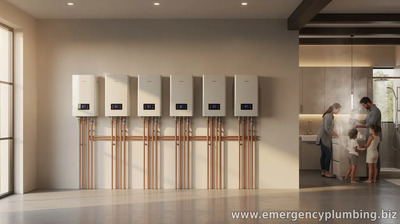
Depending on the facility, commercial systems may use multiple units, different piping layouts, or integrated controls to balance performance and efficiency. In large properties, centralized heating may also be weighed against distributed options to reduce wait times and minimize heat loss.
Energy efficiency is a deciding factor in both segments, but the strategy can differ. Residential buyers may focus on minimizing monthly utility costs for predictable use. Commercial operators often evaluate efficiency through total energy consumption, demand charges (where applicable), recovery efficiency during peak periods, and the ability to maintain temperature with minimal standby losses.
For example, a commercial facility with heavy daytime usage might benefit from configurations that sustain heating performance more efficiently during operating hours. A residential home with more evening-centric use may prioritize a system that handles intermittent draws well while keeping losses low.
Ultimately, the best choice depends on the building’s hot-water profile: expected flow rates, peak draw timing, number of fixtures or occupants, and tolerance for temperature swings. A qualified plumber or mechanical engineer can model demand and recommend sizing and equipment type—whether you’re equipping a single-family home or a multi-station commercial facility.
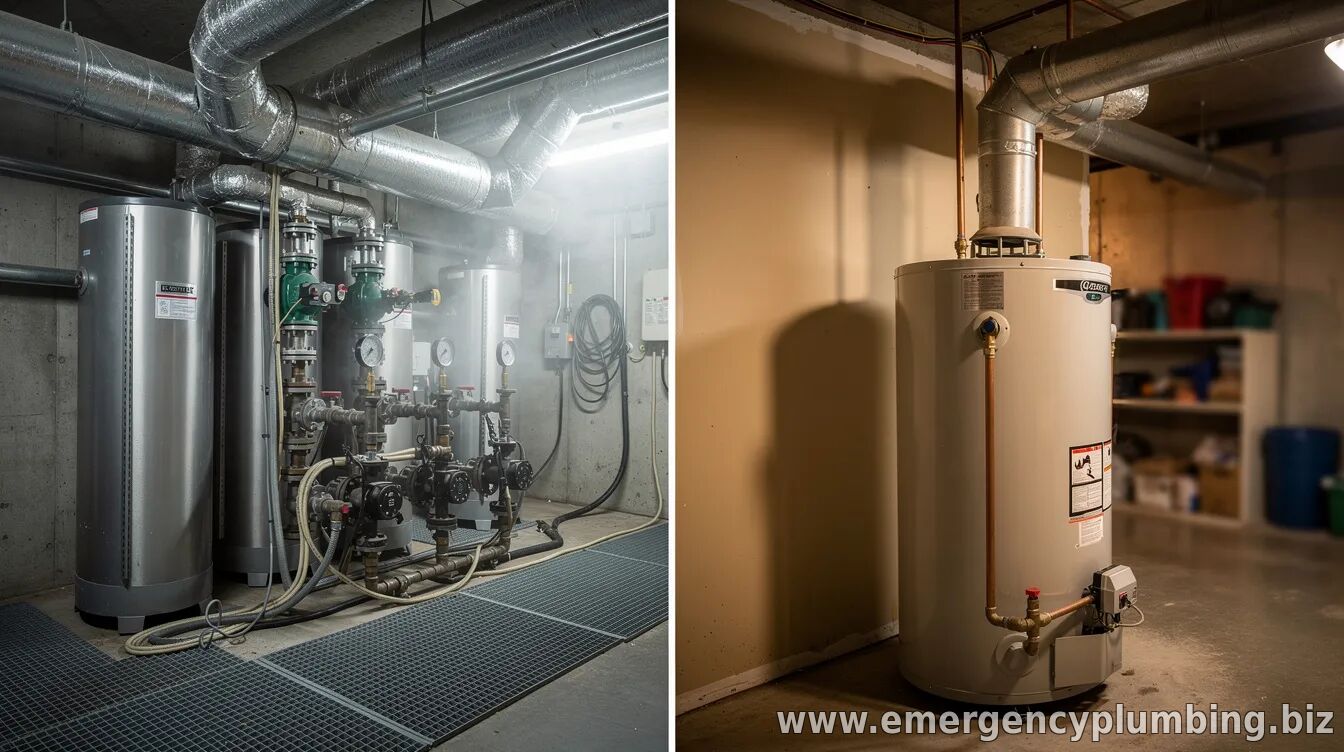
When comparing commercial versus residential water heaters, the core takeaway is that commercial systems are engineered for higher capacity, faster recovery, and operational reliability under sustained demand. Residential systems are optimized for efficiency and adequate comfort under typical household usage patterns. Matching the system to real-world demand is the most reliable path to performance, lower risk, and better long-term value.
| |
⏰ Dispatcher support 24/7
📞 224-754-1984CALL ☎ Subscribe 👆 FORUM 🗣
North Shore, Northwest suburbs of Chicago, IL
Next & Previous posts
Related articles: