

1:58 AM How to Clean a Faucet Screen (Aerator) Fast | |
Over time, mineral deposits and sediment can build up inside a faucet’s aerator screen, reducing water pressure and causing uneven spraying. Cleaning the faucet screen is usually quick, low-cost, and can noticeably improve flow.
What you’ll need
Most faucet screens can be cleaned with items you likely already have: a soft cloth, a small bowl, white vinegar (or a descaling solution), a toothbrush or small brush, and a pair of pliers (optionally). If your faucet has a removable aerator, you may also need a wrench or aerator key.
Step 1: Remove the aerator screen
Unscrew the aerator at the tip of the faucet. Wrap the aerator with a cloth first if it feels stuck to avoid scratching the finish. If it won’t turn by hand, use pliers with the cloth in between or an aerator key if you have one.
Step 2: Take note of the parts
As you remove the aerator, lay the components out in order. Many faucet screens include a mesh screen, rubber gaskets, and sometimes small flow orifice parts. Keeping them organized helps ensure everything goes back correctly.
Step 3: Soak to dissolve mineral buildup
Place the aerator components in a bowl and cover them with white vinegar. Let them soak for 30 minutes to a few hours, depending on how heavy the buildup is. If the deposits are stubborn, a longer soak is often more effective than scrubbing right away.
Step 4: Scrub and rinse
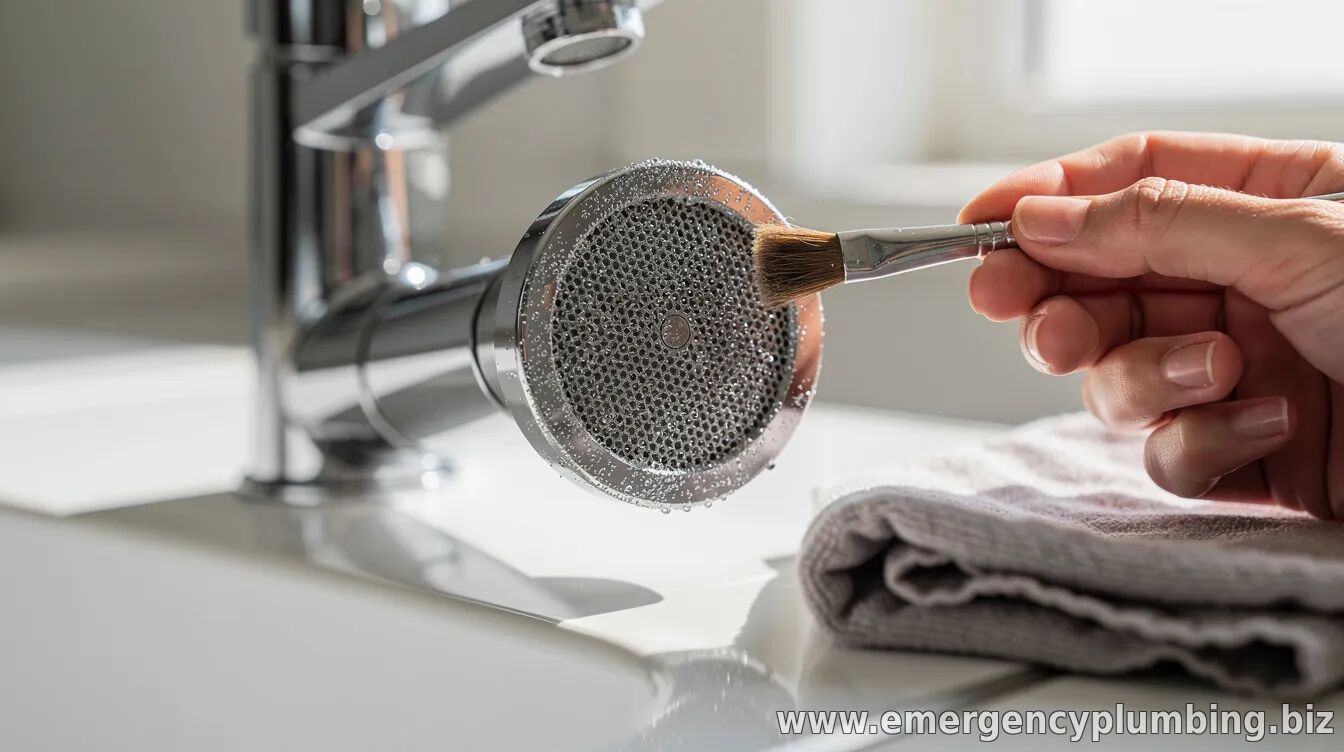
After soaking, use a toothbrush or small brush to gently scrub the screen and internal parts. Rinse thoroughly with clean water to remove loosened sediment and remaining vinegar. If the flow holes are still partially blocked, repeat the soak and scrub.
Step 5: Reassemble and test
Reinstall the screen and gaskets in the same order. Screw the aerator back onto the faucet snugly (don’t overtighten). Turn on the water and check for an even spray pattern and stronger flow. Tips to prevent clogging
To reduce future buildup, clean the aerator periodically—often every 3 to 6 months in hard-water areas. You can also run the faucet briefly to flush loose sediment after cleaning or repairs, and avoid using abrasive cleaners that can damage the mesh or finish. When to call a plumber
If cleaning the aerator doesn’t restore flow, the blockage may be further inside the faucet or related to plumbing lines. Persistent low pressure, leaks around the handle, or rapid re-clogging may require a more in-depth inspection.
| |
⏰ Dispatcher support 24/7
📞 224-754-1984CALL ☎ Subscribe 👆 FORUM 🗣
North Shore, Northwest suburbs of Chicago, IL
Next & Previous posts
Related articles: