

8:59 AM Pipe Burst at Night: What to Do Before the Plumber Arrives | |
A pipe bursting at night can turn minutes into costly water damage. The key is to act immediately, prioritize safety, and take a few practical steps to reduce the flow and protect valuables until a plumber arrives.
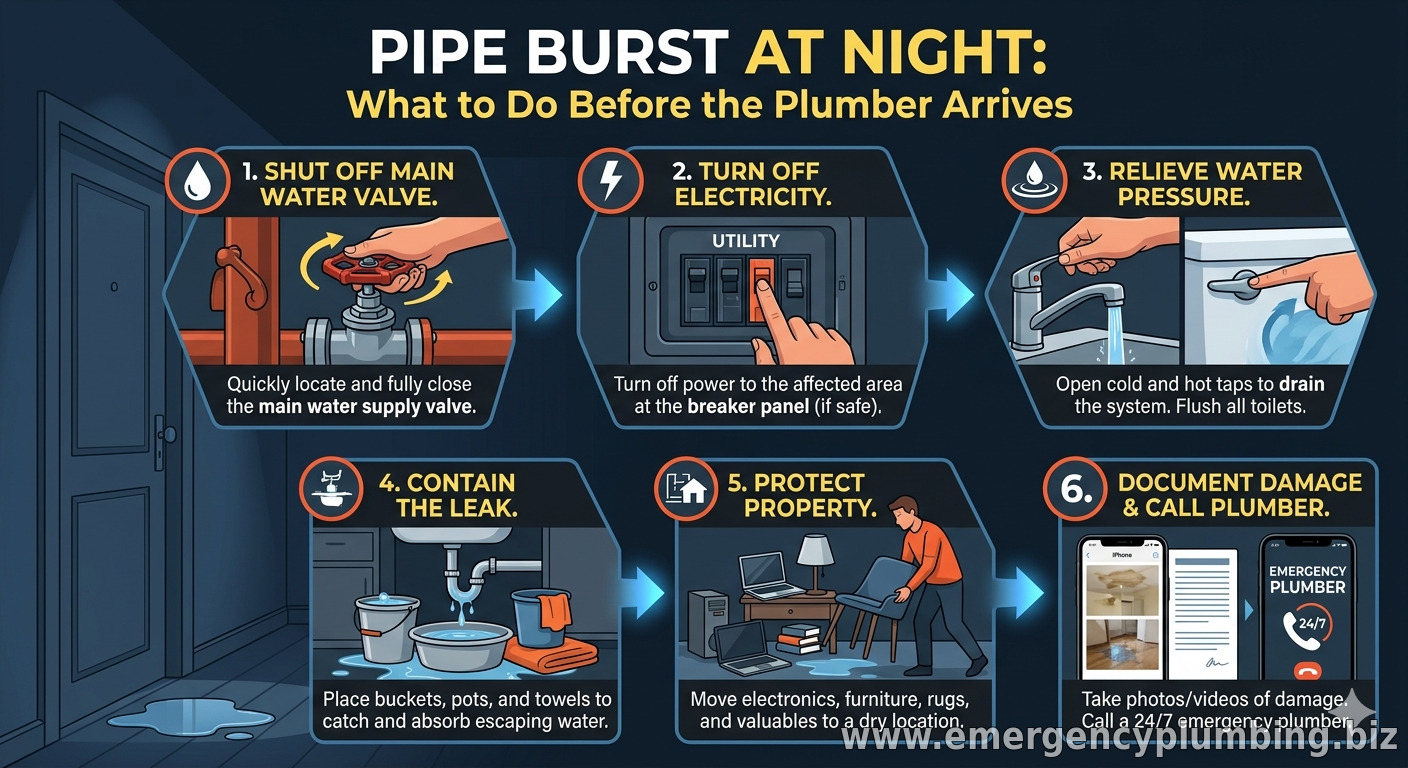
Step 1: Check for safety first. If you see sparks, smell gas, or water is near electrical outlets or appliances, do not touch switches or standing water. Keep people and pets away and, if necessary, call emergency services or your utility company. If it’s safe to do so, move to the next steps.
Step 2: Shut off the water supply. Locate your home’s main water shutoff valve (often near the water meter or where the main line enters the house) and turn it off. If you can’t find it quickly, check for a secondary shutoff (for example, near a bathroom or under a kitchen sink) and use that instead. Step 3: Turn off the water at the fixture, if applicable. If the burst appears to be contained to a specific branch, close the local shutoff valve feeding that area. Then open the nearest faucet slightly to help relieve pressure and prevent more water from forcing out of the line.
Step 4: Stop the leak where you can. If water is actively spraying, try to direct it into a tub, bucket, or drain. Use towels or a mop to keep water from spreading under doors or into walls. Avoid using tape directly on pressurized plumbing unless you already know the exact setup—temporary measures can fail under pressure.
Step 5: Manage water and protect key areas. Place containers under the leak and use towels, blankets, or waterproof mats to create a barrier. If water is coming from above (like a ceiling or upstairs pipe), protect floors below and move items away from the affected path. If you have a shop-vac rated for wet use, it can help remove pooled water once it’s safe to do so.
Step 6: Document the damage. Before cleanup gets complicated, take photos and short video clips showing the burst location, visible water spread, and any standing water. This can speed up insurance claims and help the plumber understand what happened.
Step 7: Notify the right people quickly. Call a plumber and tell them you have an active burst and whether the main water is already off. If you rent, contact your landlord immediately. If you suspect structural or electrical risk, involve the appropriate emergency or utility support.
Step 8: Prevent mold risk after the leak is controlled. Once the water flow stops, ventilate the area as soon as possible using fans if available. Remove soaked materials when safe, and continue drying for as long as it takes to reduce moisture in walls and flooring. Quick checklist (in order)
By acting fast—especially shutting off the water and controlling spread—you can often reduce the extent of repairs and keep the situation from escalating while you wait for professional help.
| |
⏰ Dispatcher support 24/7
📞 224-754-1984CALL ☎ Subscribe 👆 FORUM 🗣
North Shore, Northwest suburbs of Chicago, IL
Next & Previous posts
Related articles: