

0:53 AM Water Softener vs. Salt-Free Conditioner: What to Choose | |
If your shower leaves soap scum behind, faucets spot quickly, or your water heater seems to struggle, hard water may be the culprit. The two most common solutions are water softeners (usually salt-based) and salt-free conditioners. Both can improve water feel and reduce scale, but they work in different ways—and that affects performance, cost, and ongoing maintenance. How a water softener works
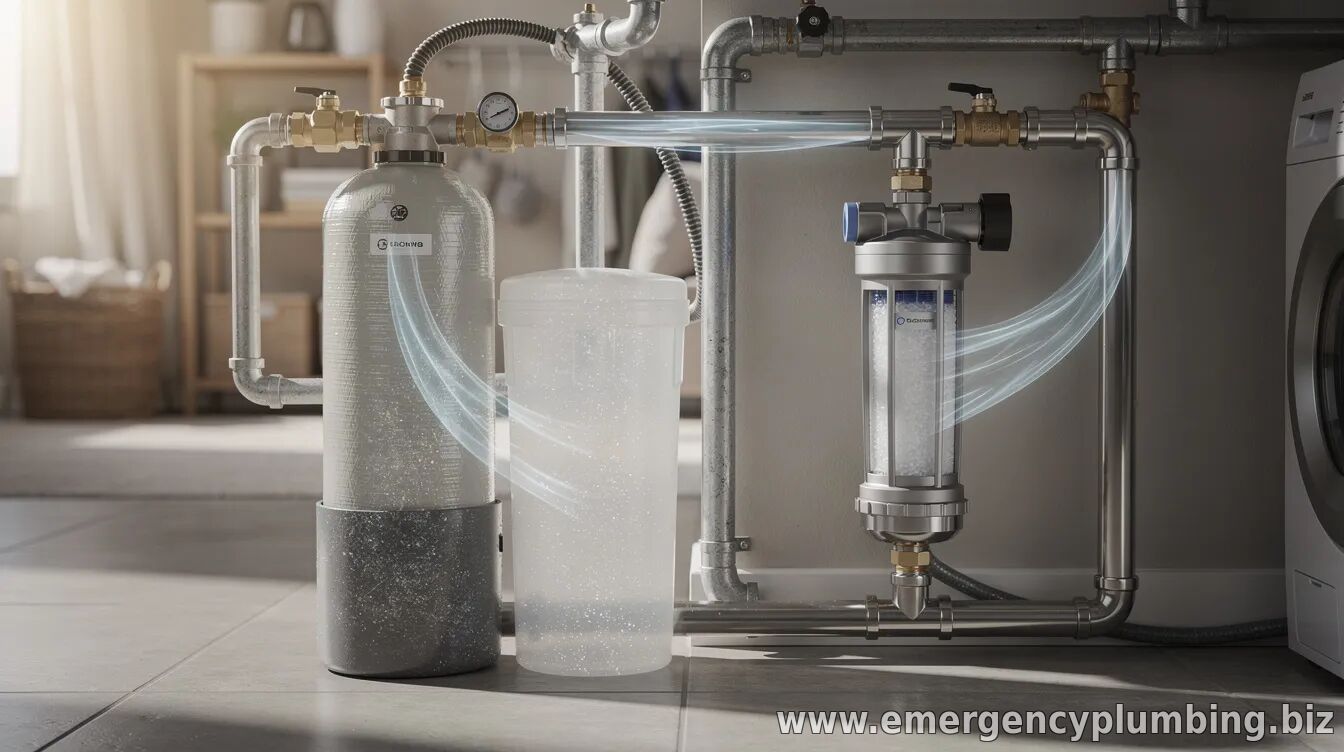
A traditional water softener uses ion exchange to remove hardness minerals—primarily calcium and magnesium. It replaces them with sodium (or potassium in some systems). Over time, the system regenerates using salt (or brine), flushing accumulated minerals out through a drain line. The result is water that’s “soft” in the strict sense: fewer scale-forming minerals and improved lathering. How a salt-free conditioner works
Salt-free conditioners are typically designed to prevent scale buildup rather than remove hardness minerals. Many use template-assisted crystallization (often called TAC) or similar technologies that change how minerals precipitate, so they’re less likely to adhere to pipes and fixtures. Since there’s no brine tank, there’s usually no salt delivery or regeneration cycle. However, hardness minerals may still be present in the water.
In real-world terms, salt-free systems often help with scale prevention, but the degree of improvement can depend on local water chemistry and the system’s design. If you’re dealing with very high hardness, a softener may provide more predictable results. What each option means for your home
Think about the symptoms you want to solve:
It’s also worth considering plumbing and appliance longevity. If your home has older pipes or hard-water scaling has been severe, softening may better protect internal surfaces—especially for water heaters and boilers. Cost and long-term value
Upfront pricing varies by brand and capacity, but the long-term cost drivers are usually different. For softeners, recurring salt (or potassium) and routine regeneration cycles matter. For salt-free systems, the “no salt” benefit can lower maintenance, though some units may be less effective for certain water profiles, potentially requiring confirmation of performance after installation.
Many homeowners find the best value comes from matching the solution to measured water hardness and specific issues. If you haven’t yet, test your water—hardness is usually expressed in grains per gallon (gpg) or mg/L.
As a rule of thumb: if you want the most reliable reduction of hardness-related problems (especially for very hard water), a softener is often the stronger choice. If your goal is primarily to limit scale with minimal maintenance and your hardness level is moderate (or your water chemistry is a good fit for conditioning), a salt-free system may be sufficient.
Before deciding, check your household needs (number of occupants, water usage, and appliance types), confirm your hardness level, and review manufacturer specifications for the system’s flow rate and treatment capacity. With the right match, either approach can help your home’s water feel and perform better.
| |
⏰ Dispatcher support 24/7
📞 224-754-1984CALL ☎ Subscribe 👆 FORUM 🗣
North Shore, Northwest suburbs of Chicago, IL
Next & Previous posts
Related articles: