

1:03 AM Shower vs Bath: Which Uses More Water? | |
For people trying to cut household water use—and lower energy costs tied to hot water—the shower-versus-bath question is a common one. The practical answer: in many everyday scenarios, showers can be more water-efficient, but long, high-flow showers can quickly erase the advantage.
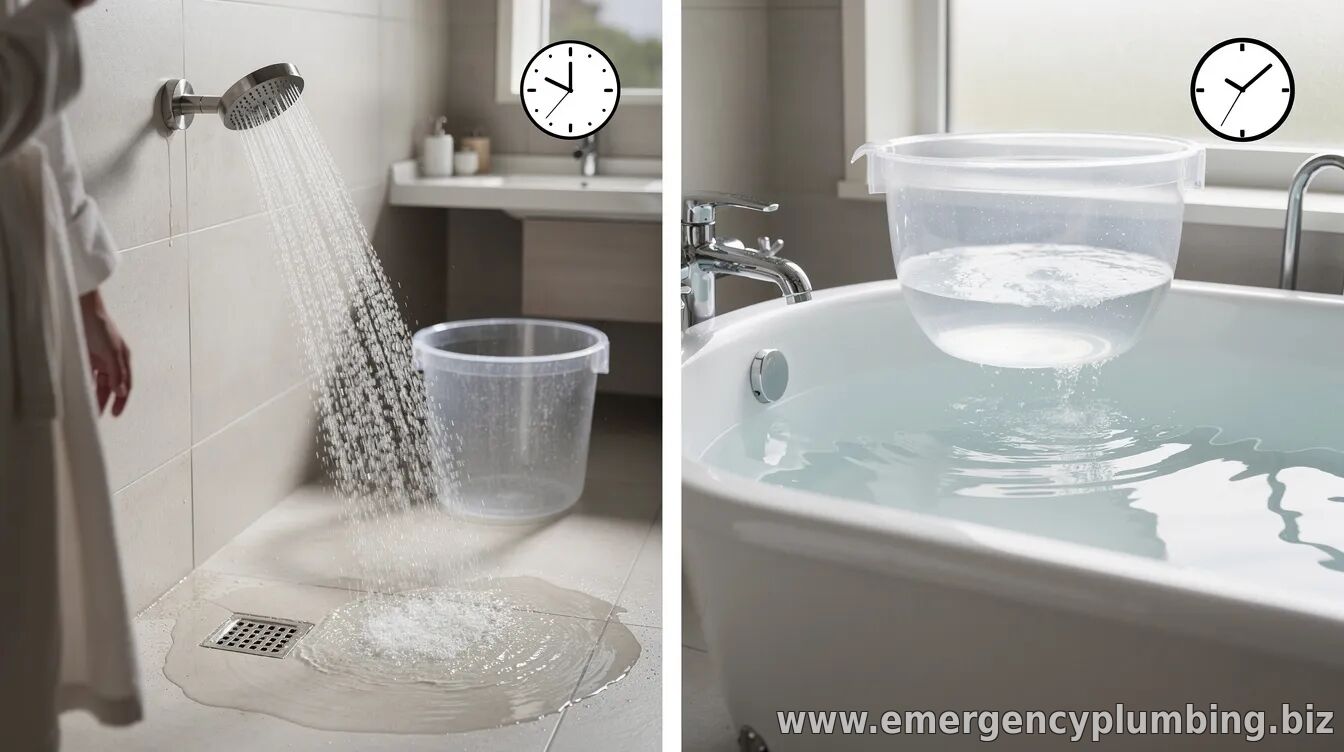
Water consumption is mainly driven by volume (how much water flows into your drain or sits in the tub) and time (how long water runs). That means comparisons hinge on your faucet and showerhead settings, tub size, and how you use hot water during the process. Typical water use: showers
A standard showerhead often uses roughly 2 to 2.5 gallons per minute, though modern “low-flow” models may be lower and some high-pressure setups can be higher. For example, a 5-minute shower could range around 10 to 12.5 gallons, while a 10-minute shower could double that range.
The shower also allows some efficiency tactics: turning off the water while lathering (rather than running continuously) can reduce use significantly. In contrast, if you leave the water running for the full duration, showers can become a major water draw. Typical water use: baths
A bath usually starts with a full tub of water. Many standard tubs hold on the order of 30 to 60 gallons, depending on tub dimensions and how full it’s filled. Even partial “half baths” can still use substantial water compared with a short shower.
That’s why baths often consume more water overall—especially when the bath is filled to a typical comfortable level and used to soak rather than quickly rinse. So which is more water-efficient?
In general, a short shower tends to use less water than a full bath. However, if your shower is long and the showerhead flow rate is high, the water use can approach or even exceed what you’d use for a bath—particularly if the bath is kept to a lower fill level.
A quick rule of thumb: if your showers are usually around 5 minutes with a moderate or low-flow showerhead, showers are often the more efficient choice. If you routinely shower for 10–15 minutes with a high-flow head, or if you fill large tubs, the comparison can swing.
To reduce water use regardless of your choice, consider upgrading to a low-flow showerhead, timing showers, and—when possible—turning off water while soaping. If you prefer baths, filling less than the full tub and using smaller tubs can help close the gap.
| |
⏰ Dispatcher support 24/7
📞 224-754-1984CALL ☎ Subscribe 👆 FORUM 🗣
North Shore, Northwest suburbs of Chicago, IL
Next & Previous posts
Related articles: