

0:49 AM Water Hammer Explained: Why Pipes Bang and How to Fix It | |
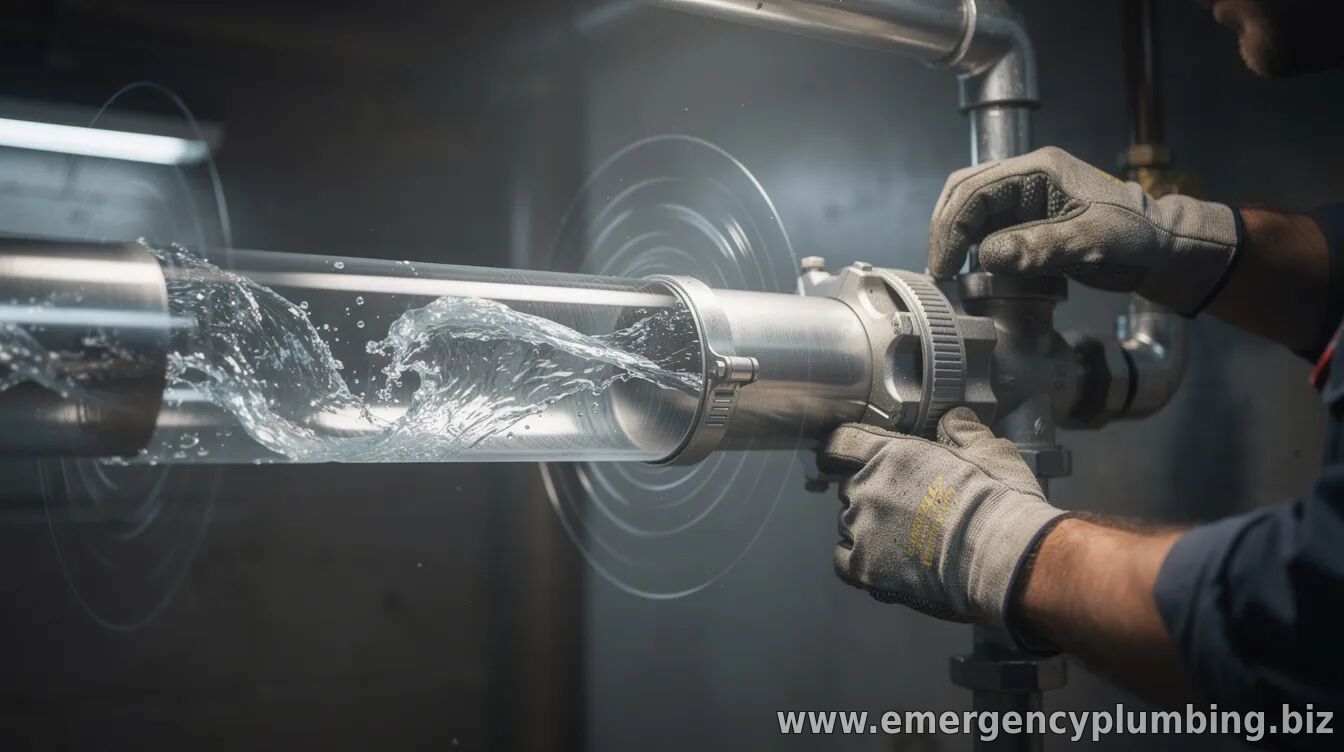
A sudden banging or thudding in your walls when you turn off a tap, flush a toilet, or close a valve is usually water hammer. It’s not random: it happens when moving water is forced to stop or change direction quickly, creating a pressure surge that travels through your plumbing like a shockwave.
While the noise is often the first thing homeowners notice, repeated water hammer can stress joints, loosen fittings, and contribute to leaks over time. Understanding what causes it—and addressing the underlying plumbing behavior—can reduce both sound and risk. What causes water hammer?
Water hammer occurs when water flow is interrupted suddenly. For example, a faucet may close instantly, or a toilet fill valve may stop water abruptly. The flowing water’s momentum has to go somewhere; when it’s stopped too quickly, pressure spikes form. Those spikes rebound through the system, producing the characteristic bang.
The severity depends on factors like how fast the valve closes, the length and diameter of the pipe run, and the overall pressure in your home’s water supply. Higher pressure and faster shutoff generally lead to louder, harsher surges. Common triggers you can check
Several everyday plumbing events can set off water hammer, especially in homes with older or tight-fitting systems.
If the banging happens at the same moments every time, that repeatability is a strong clue to pinpoint the exact fixture or valve behavior causing the surge. How to fix it (practical options)
The goal is to give the plumbing system “room” to absorb the pressure surge or slow down the rate at which flow is stopped. Repairs range from simple upgrades to targeted devices.
1) Install water hammer arrestors: These small devices are designed to absorb pressure spikes near the source. A plumber can install arrestors on water lines for the affected fixtures—often under sinks or near toilets—so the shock doesn’t travel through the whole house.
2) Use pressure-reducing solutions: If your home’s incoming pressure is too high, water hammer tends to be worse. A properly adjusted pressure reducing valve (PRV) can help control overall pressure and reduce the intensity of surges.
3) Replace quick-closing valves or upgrade components: Some toilet fill valves and other shutoff mechanisms close faster than needed for quieter operation. Replacing a problematic valve with a “quiet” or appropriate-speed model can reduce banging at the source.
4) Check for loose or failing supports: If pipes vibrate because they’re not well secured, even normal pressure changes can sound louder. Ensuring pipes are properly anchored can make the system less noisy, though it may not eliminate water hammer by itself. When to call a professional
If you’ve confirmed the banging is consistent, but the noise persists after component tweaks—or if you suspect high pressure, deteriorating pipe conditions, or recurring shocks across multiple fixtures—bring in a licensed plumber. They can measure pressure, identify where the surge originates, and install correctly sized arrestors or make system adjustments that prevent future stress.
As a general rule, treat water hammer as more than a nuisance: it can be a sign that your system’s pressure and flow-control behavior aren’t well matched. Addressing it promptly can help avoid escalating issues like leaks and worn fittings.
If you tell us which fixtures bang (toilets, specific sinks, appliances) and roughly where the noise originates in your home, it’s often possible to narrow down the most likely cause and the most effective fix.
| |
⏰ Dispatcher support 24/7
📞 224-754-1984CALL ☎ Subscribe 👆 FORUM 🗣
North Shore, Northwest suburbs of Chicago, IL
Next & Previous posts
Related articles: