

0:54 AM How Reverse Osmosis Water Systems Work (Simple Guide) | |
Reverse osmosis (RO) is a water purification method designed to remove a wide range of dissolved substances—like salts, many heavy metals, and many contaminants—from tap water. While RO systems may look complex, the core idea is straightforward: force water through a special filter that only allows certain molecules to pass.
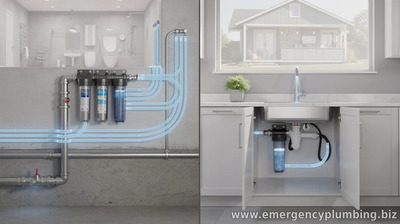
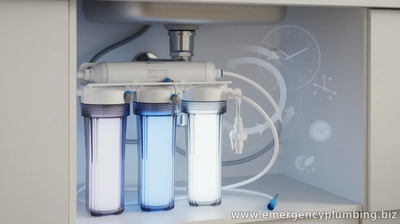
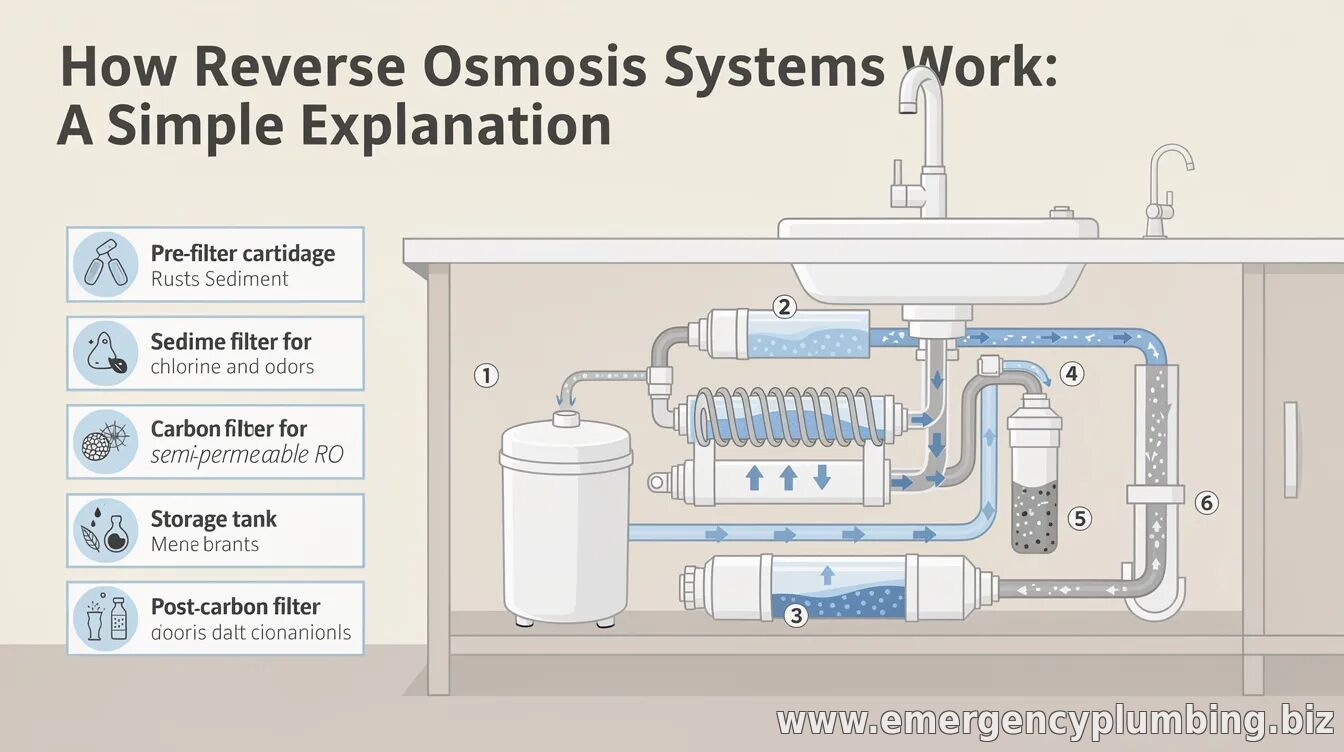
An RO system typically combines several filtration steps. These stages protect the membrane, improve water quality, and help ensure the process runs efficiently. The exact setup varies by model, but most systems follow the same general flow. Step 1: Pretreatment to protect the membrane
Before raw water reaches the RO membrane, it usually passes through a prefilter stage. Common pretreatment includes a sediment filter to remove sand, rust, and other particles, and sometimes an activated carbon filter to reduce chlorine taste and odor. This matters because chlorine and fine debris can foul or damage the RO membrane over time. Step 2: The RO membrane and pressure
The heart of the system is the RO membrane—a thin, semi-permeable barrier. RO works by applying pressure to the incoming water, pushing it through the membrane. Only water molecules can pass through effectively, while many dissolved contaminants are left behind and carried away from the membrane.
As a result, the output splits into two streams: “permeate” (the purified water that passes through the membrane) and “concentrate” (the water containing the rejected contaminants). The system directs the concentrate to a drain or reuse pathway, depending on the design. Step 3: Post-treatment and storage
After the membrane, RO water often goes through additional polishing steps. This may include a carbon filter to improve taste or a remineralization stage to add beneficial minerals, depending on the system’s design and the water’s starting chemistry.
Many home RO units also include a storage tank. This allows purified water to be available on demand, rather than producing it only when a tap is opened. Some newer systems use “tankless” designs, producing RO water as needed. What RO systems remove—and what they don’t
RO is especially effective against dissolved solids such as salts and many other small dissolved contaminants. However, performance depends on the membrane quality, operating pressure, maintenance, and the characteristics of the source water. Some gases and certain chemicals may require specific pretreatment steps, and no single filtration method can address every possible contaminant in every water supply.
For best results, RO system owners should follow manufacturer guidance for filter replacement and periodically test their water. This helps confirm that the system is performing as intended over time.
In short, reverse osmosis works by combining pretreatment, high-pressure filtration through a semi-permeable membrane, and post-treatment to produce cleaner water. Once you understand the flow of water through these stages, the rest is mostly about maintenance and choosing the right system for your water source.
| |
⏰ Dispatcher support 24/7
📞 224-754-1984CALL ☎ Subscribe 👆 FORUM 🗣
North Shore, Northwest suburbs of Chicago, IL
Next & Previous posts
Related articles: