

2:28 AM Do You Need Backup Beyond a Sump Pump? Flood Control Guide | |
Basement flooding is often treated as a problem solved by a sump pump—but real-world conditions can overwhelm even well-installed systems. Heavy rainfall, clogged intakes, failed check valves, or a simple power interruption can turn a single point of failure into a costly event.
That’s why many homeowners are rethinking sump-pump-only protection and looking for layered flood control. The goal is not just to pump water, but to keep water moving out of the basement when conditions degrade. Why backup matters when storms hit
Sump pumps depend on electricity and mechanical components. During severe weather, demand on the system can rise at the same time power reliability can drop. A backup plan is designed to bridge those gaps—especially when groundwater levels surge faster than the pump can keep up.
Common failure points include power outages, a dead battery on an existing backup, pump wear over time, debris clogging the intake, and check valves sticking so water flows back into the pit. Even small issues can compound during sustained rainfall. When a backup beyond the sump pump is worth considering
Homeowners typically evaluate added resilience when they have a track record of near-flood events, limited evacuation time during storms, or a basement that finishes living space. Backup is also more compelling if the home sits in a flood-prone area, has experienced repeated water intrusion, or relies on a single pump without redundancy.
Property risk isn’t only geographic. It can be influenced by nearby drainage problems, roof runoff routing, older foundation drainage systems, and how often the pump runs. If your sump pump cycles frequently or runs for long periods after storms, that’s a sign to assess capacity and reliability. Backup options: what to add and why
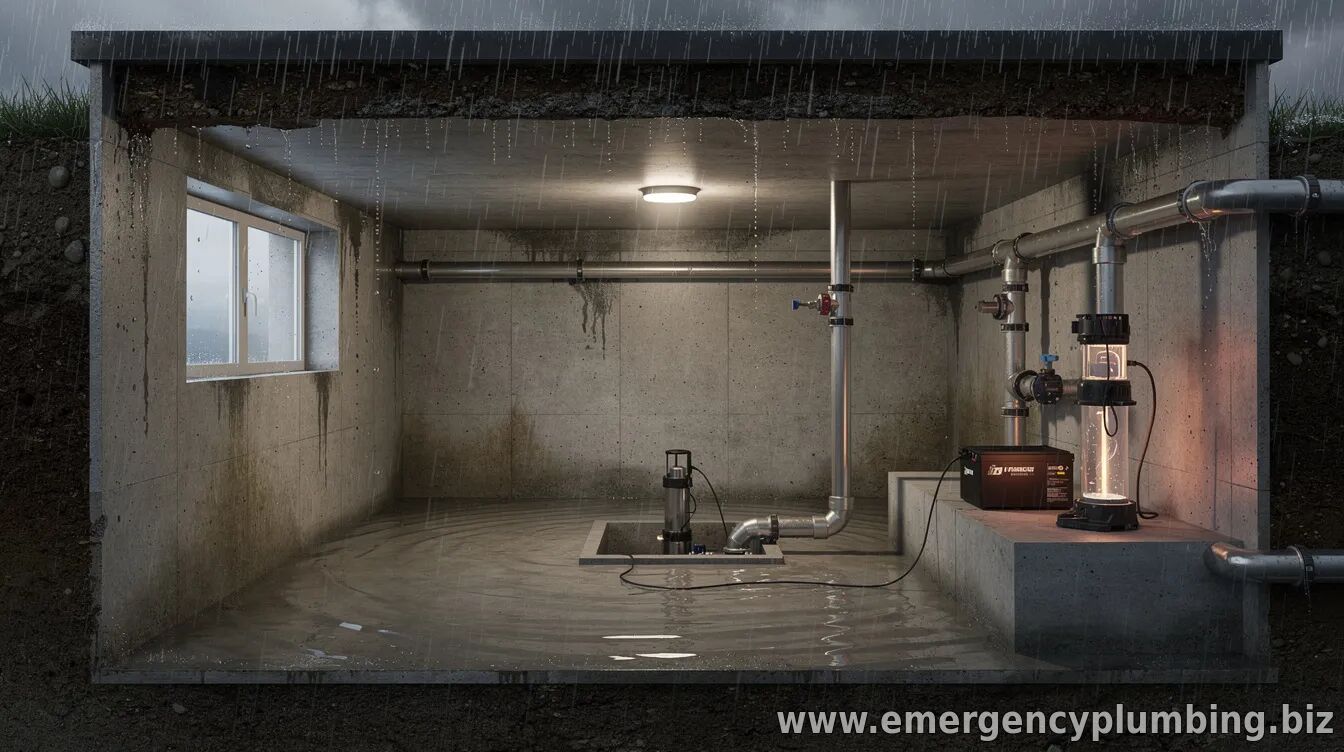
Several approaches can strengthen protection, and many households benefit from combining more than one. A battery backup for the sump pump can help during short outages, while a second pump—often paired with an alarm system—provides redundancy if the primary unit fails or underperforms.
Other layers may include:
In some scenarios, homeowners also explore exterior solutions such as regrading, downspout extensions, or adding or improving perimeter drainage—measures that can reduce the load on the sump system. Maintenance is part of “backup”
Backup hardware can fail if it’s not maintained. Experts generally recommend periodic inspections: checking the pump’s condition, confirming the float switch operates freely, cleaning debris around the pit, and verifying the discharge line isn’t obstructed.
For systems with batteries or secondary pumps, testing is crucial. Battery-backed setups should be checked on a regular cadence, and the alarm should be verified so it actually alerts during simulated conditions—not just on paper. How to decide: a practical checklist
If you’re unsure whether you need more than a sump pump, start with your risk and system performance. Consider whether you have documented outages, how long water typically takes to clear after heavy rain, and whether your pump runs continuously during peak storms.
A clear next step is to review your sump pit capacity, pump capacity, and discharge routing. Many homeowners also consult a qualified contractor to confirm the system is correctly sized for local rainfall patterns and that the electrical setup meets current safety standards.
For anyone with a history of basement water, the common takeaway is straightforward: the best flood control strategy is layered. A working sump pump is essential, but backup and prevention measures can protect you when the unexpected happens.
| |
⏰ Dispatcher support 24/7
📞 224-754-1984CALL ☎ Subscribe 👆 FORUM 🗣
North Shore, Northwest suburbs of Chicago, IL
Next & Previous posts
Related articles: