

1:41 AM Hydro Jetting vs Snaking: Which Clears Drains Better? | |
Homeowners dealing with recurring clogs often hear two competing answers: “snake it” or “jet it.” Both hydro jetting and drain snaking can restore flow, but they work differently—meaning the “best” option depends on the type of blockage, pipe condition, and how thoroughly you want the line cleaned. How drain snaking works
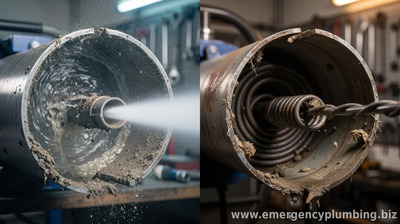
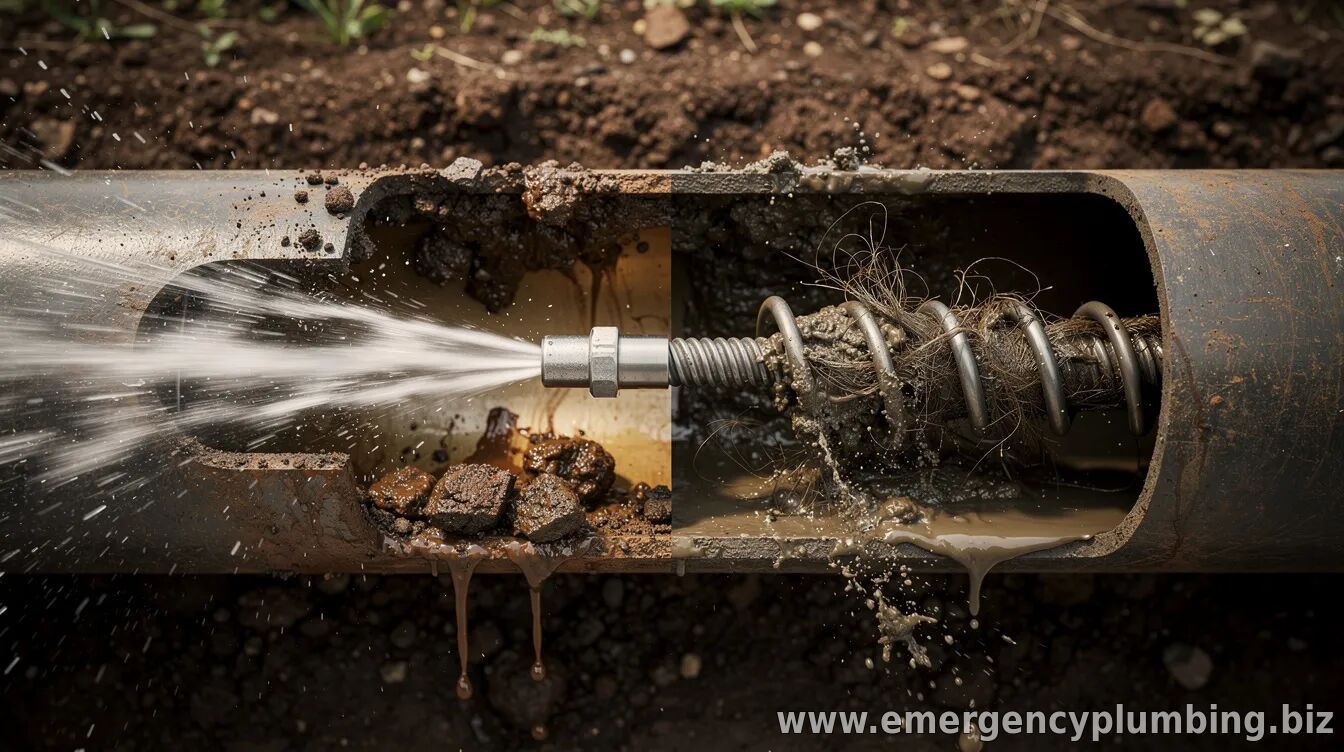
Drain snaking (or using a plumbing auger) feeds a flexible cable with a cutting or retrieval head through the drain line. As the tool advances, it breaks up many obstructions or hooks and pulls out the material causing the clog. Snaking is commonly used for blockages that are relatively localized and mechanically obstructive.
Snaking tends to be a practical first step when the blockage is near the access point, when the exact cause is unknown, or when you need a quicker, less intensive approach. However, it typically focuses on the obstruction itself rather than fully cleaning away the grime and residue that can contribute to future clogs. How hydro jetting works
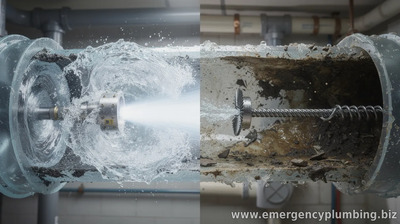
Hydro jetting uses high-pressure water to scour the inside of the pipe. The jet stream can break apart buildup such as grease, sludge, mineral scale, and biofilm, and it can flush loosened material out of the line. Because it targets the pipe walls directly, hydro jetting is often described as a more comprehensive cleaning method.
When done correctly, hydro jetting can be particularly effective for recurring slow drains where partial buildup is accumulating over time, or for lines that may have stubborn deposits rather than a single discrete object. It can also help restore flow by clearing behind residue that a cable may not fully remove. Which clears drains better?
For “deep cleaning” and long-term flow restoration, hydro jetting generally clears drains more thoroughly than snaking. By removing material from the pipe walls, it reduces the likelihood that leftover buildup will quickly recreate the same blockage pattern.
For “right now” obstruction removal—especially when a clog is caused by a localized obstruction—snaking often solves the problem with less complexity. The tradeoff is that snaking may not address the underlying film or deposits that helped the blockage form in the first place.
In practice, many plumbers treat the decision as a question of what’s inside the pipe: a cable can tackle many mechanical blockages, while jetting is designed to clean the broader interior surface. If the line is known to have heavy grease buildup or recurring clogs, hydro jetting usually has the edge. If the issue is more likely to be a single stoppage, snaking may be the faster path. When each method is the safer fit
Pipe condition and system layout matter. Hydro jetting is most effective when the line and fittings can safely handle high pressure and when the blockage is such that flushed material can be cleared from the system. In sensitive situations—such as damaged pipes, certain older systems, or cases where the downstream flow path is constrained—an approach that involves less force may be preferred or used first.
Snaking is often chosen for tighter access situations or as an initial attempt when the exact cause is unclear. If snaking breaks up the clog but symptoms return quickly, that can be a signal that the line needs wall cleaning—at which point hydro jetting may be recommended.
Ultimately, the “better” method depends on diagnosis. The most reliable way to choose is to identify the likely source of the clog—grease, sludge, roots, mineral scale, a lodged object, or a combination—then match the technique to the material. In many cases, plumbers may use one method first and follow with the other to balance speed and thoroughness.
If you’re dealing with repeated backups, consistent slow drains, or clogs that return after snaking, hydro jetting is commonly the next step for deeper cleaning. If you have a straightforward obstruction and want a direct mechanical fix, snaking can be the efficient option. When in doubt, ask whether a camera inspection is being used to confirm what’s happening inside the pipe, since that information can determine whether jetting, snaking, or a combined approach will deliver the best results.
| |
⏰ Dispatcher support 24/7
📞 224-754-1984CALL ☎ Subscribe 👆 FORUM 🗣
North Shore, Northwest suburbs of Chicago, IL
Next & Previous posts
Related articles: