

0:58 AM Traditional vs. Power Vent Water Heaters: Key Differences | |
Choosing a new water heater is often less about the tank itself and more about how safely and efficiently it can vent combustion gases. That’s where the main difference between traditional (atmospheric) water heaters and power vent water heaters shows up—along with implications for installation flexibility and performance. In general terms, traditional units rely on natural draft to move exhaust out of the home, while power vent models use a fan to push exhaust through the vent system. The right choice depends on your home’s layout, existing venting, and local code requirements. 1) How each system vents exhaust
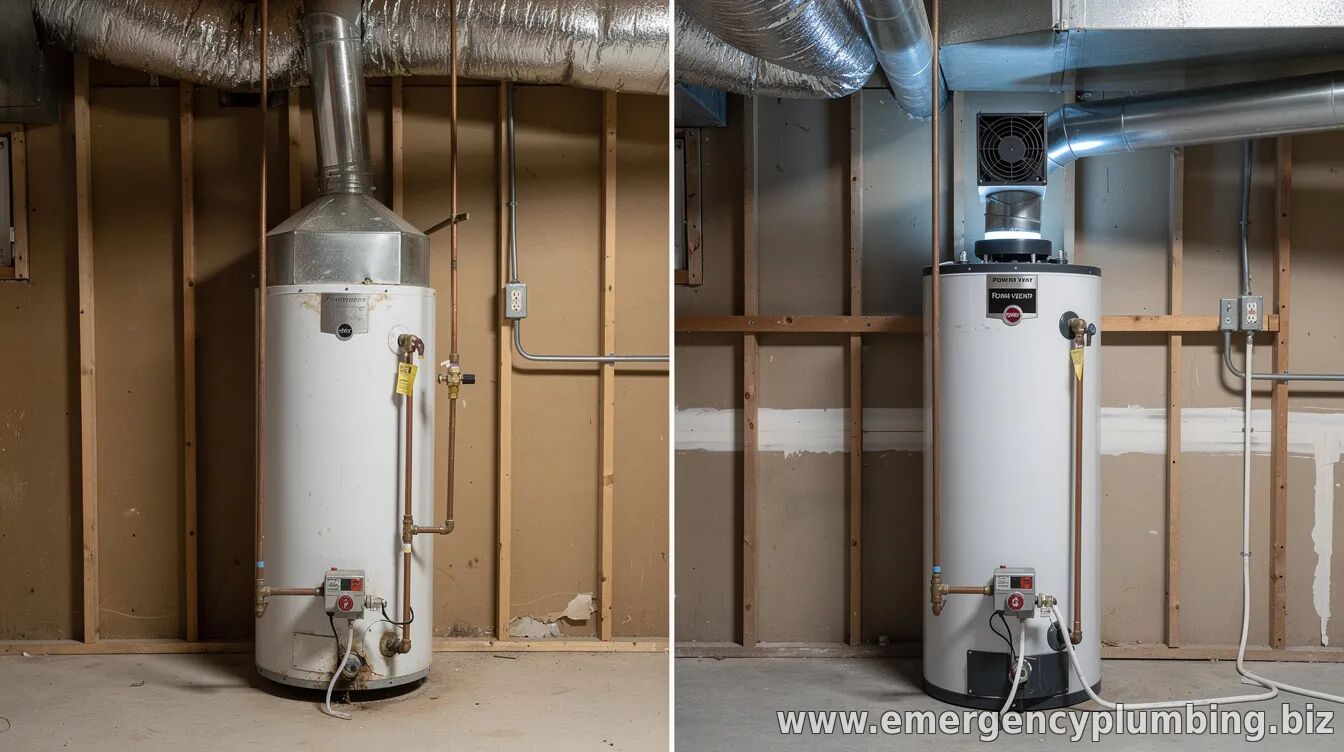
Traditional (non-powered) water heaters typically use natural draft. They draw combustion air from the room (or a nearby air source per design) and rely on hot exhaust rising through a vent to clear gases.
Power vent water heaters use a powered fan to force exhaust through the vent. Because the fan provides the driving force, the vent route can sometimes be more adaptable to the home’s constraints (though it still must follow manufacturer instructions and code). 2) Installation and space requirements
Traditional water heaters are often straightforward when you have a vertical venting path and suitable room conditions. However, they can be more sensitive to venting configuration—especially in tight spaces or where venting must run longer or in less ideal directions.
Power vent systems may be a better fit when venting needs flexibility, such as routing challenges in basements, closets, or installations where routing exhaust upward is difficult. They may also reduce reliance on natural draft that can be affected by wind or pressure changes outdoors. 3) Indoor air, safety, and home pressure
Both types must be installed correctly to manage combustion and exhaust safety. The key practical distinction is that power vent units can operate more reliably under varying conditions because the fan assists exhaust removal rather than depending solely on natural draft.
In homes where pressure differences can occur—such as with certain exhaust fans, clothes dryers, or HVAC systems—vent performance can be a deciding factor. Homeowners should ensure the installation accounts for makeup air and meets local ventilation requirements, regardless of the model. 4) Efficiency, performance, and recovery
Power venting doesn’t automatically mean “more efficient” in every case, but it can help maintain stable venting performance. That stability can support consistent burner operation when exhaust removal might otherwise be less reliable.
When comparing models, focus on recognized efficiency metrics (such as thermal efficiency or EF where applicable), fuel type (gas vs. propane), and recovery rate. The venting approach matters most when it affects safe, consistent operation—not necessarily when it changes the underlying heating design. 5) Cost considerations: equipment, wiring, and venting parts
Power vent water heaters generally require additional components compared with traditional designs—most notably the fan and associated controls, and often an electrical connection for the system to run.
That can mean higher upfront equipment cost and potentially higher installation cost if new wiring, venting components, or vent modifications are needed. However, the total cost of ownership may improve if the installation avoids repeated service issues, helps achieve stable operation, or better matches your home’s venting constraints.
Traditional models can be less expensive up front and simpler to install when the home already has an appropriate venting setup. But if your venting would require difficult changes or doesn’t meet the unit’s requirements, the cheaper “equipment price” can lose out to the cost of rework. How to choose the better option for your home
If you’re deciding between the two, the best approach is to match the venting method to your space and your existing infrastructure. Consider the following questions:
Ultimately, the “best” choice is the one that can be installed safely, vented correctly, and sized properly for your household hot-water demand.
If you’re replacing an older unit, it’s also wise to have a licensed professional evaluate the venting, combustion air, and electrical requirements—not just the heater. Small installation details can strongly influence safety and day-to-day performance.
| |
⏰ Dispatcher support 24/7
📞 224-754-1984CALL ☎ Subscribe 👆 FORUM 🗣
North Shore, Northwest suburbs of Chicago, IL
Next & Previous posts
Related articles: