
0:37 AM Water Softener vs Salt-Free Conditioner: Illinois Homes | |
Hard water is common across Illinois, and it can leave scale on fixtures, reduce soap performance, and contribute to buildup in water heaters and plumbing. When households start shopping for treatment, one of the biggest decisions is whether to install a traditional water softener or a salt-free (non-salt) conditioner.
Both approaches aim to improve how water behaves in the home, but they do it in different ways. Understanding what each system changes—and what it doesn’t—can help Illinois families pick the most cost-effective solution for their plumbing and lifestyle. What a traditional water softener does
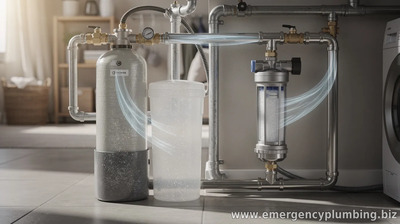
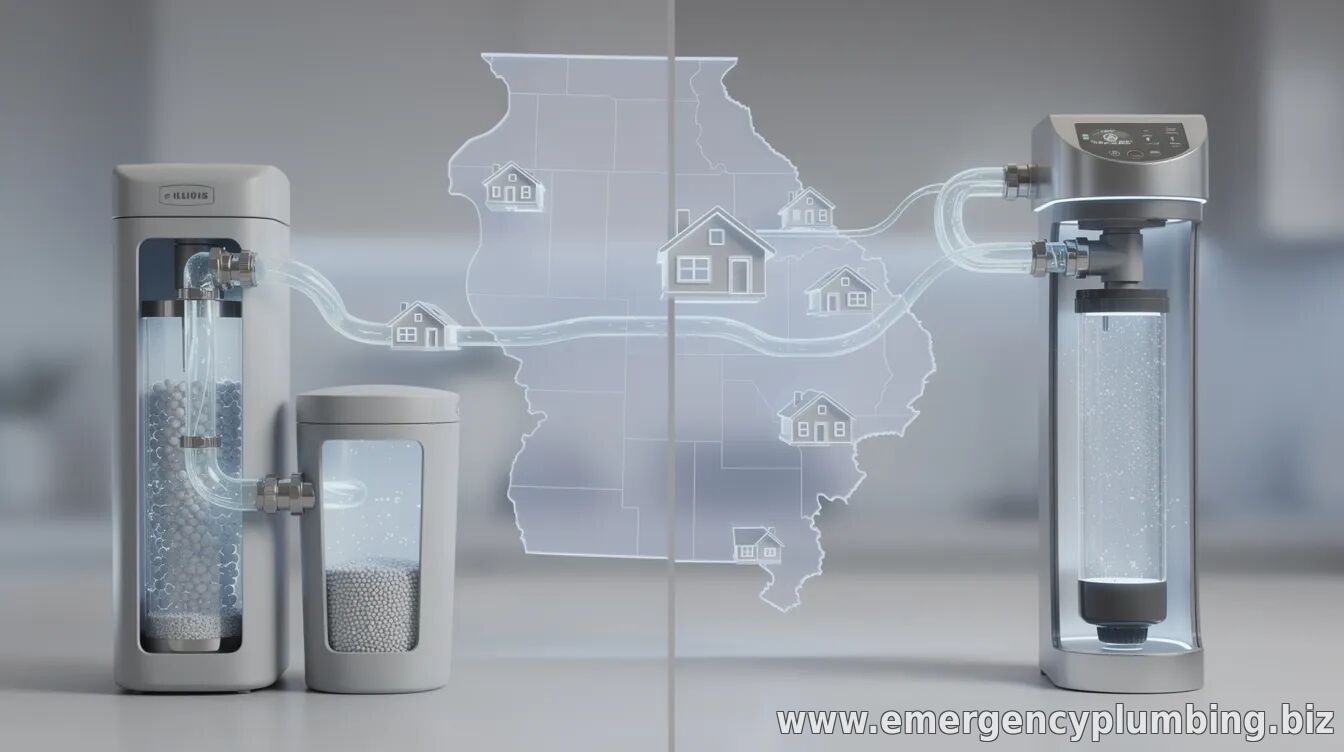
A conventional water softener removes hardness minerals—mainly calcium and magnesium—from water using an ion-exchange process. Instead of pushing those minerals through your plumbing, the system replaces them with sodium (or another approved ion, depending on the system design). Because the hardness minerals are removed, softened water typically reduces scale buildup and can make cleaning easier.
Water softeners regenerate periodically (often using brine), which means they require ongoing maintenance and periodic salt or brine replenishment, depending on the setup. For many Illinois homes with strong hard-water issues, the removal approach is the most reliable way to limit limescale. How salt-free conditioners work
Salt-free conditioners generally do not remove hardness minerals. Instead, they alter how calcium and magnesium behave—often by reducing scaling tendency through processes such as template-assisted crystallization (TAC) or similar conditioning mechanisms. The result is that existing hardness may still be present, but it’s less likely to form hard deposits on surfaces.
This can be appealing for homeowners who want to avoid adding salt to their water system or prefer lower day-to-day maintenance. Because the minerals aren’t fully removed, performance can vary by household: some homes see excellent reduction in scale, while others—especially with very high hardness—may find that a true softener works more consistently. Which Illinois homes benefit most from each option
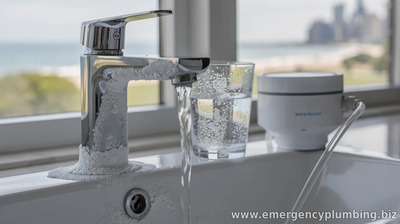
Choosing between the two often comes down to how hard your water is and how you experience it in daily life. If you notice persistent white scale rings in kettles or showerheads, frequent buildup on faucets, and reduced efficiency in appliances, a traditional softener may be the stronger fit.
Salt-free conditioners can be a good match for homes where scale is moderate, maintenance is a priority, or you have reasons to minimize salt usage. They may also be considered when homeowners want a simpler setup that doesn’t require routine brine/salt handling.
Because “hardness” can vary widely within Illinois—even between nearby towns—the most practical next step is to test your water. Local water hardness reports and lab tests can clarify your grains per gallon (or parts per million) and make the decision more objective than relying on general assumptions. Costs, efficiency, and long-term value
In many homes, the long-term value of a water softener comes from preventing buildup that can shorten the life of water heaters, reduce cleaning frequency, and preserve plumbing performance. However, that value depends on proper sizing, correct installation, and service over time.
Salt-free conditioners may have a different cost profile: less operational hassle related to salt and regeneration. Still, they are not a one-size-fits-all fix. If scaling remains a significant problem, owners may end up paying for a system that doesn’t fully address their hardness conditions.
For Illinois residents deciding between the two, the “best” choice is typically the one that aligns with (1) your measured water hardness, (2) how visible the scaling is, and (3) your tolerance for maintenance requirements. Next steps for Illinois homeowners
Before buying, request or perform a water test and review your hardness level. Ask a qualified installer to recommend system sizing based on household size and water usage patterns. If you’re considering a salt-free option, confirm the expected benefits for your specific hardness and discuss whether any additional filtration or treatment is recommended for other issues such as sediment or iron.
Hard-water problems are fixable in Illinois, but the right solution depends on your water’s chemistry and your home’s needs. With a test in hand, homeowners can make a decision that reduces scale, protects appliances, and fits their maintenance preferences.
| |
⏰ Dispatcher support 24/7
📞 224-754-1984CALL ☎ Subscribe 👆 FORUM 🗣
North Shore, Northwest suburbs of Chicago, IL
Next & Previous posts
Related articles: