

3:05 AM Tank vs. Tankless Water Heaters: Which Fits Your Home? | |
Water heating is one of the most frequent “behind the scenes” needs in a home. The decision to install a traditional tank water heater or a tankless unit affects your monthly utility bills, available space, upfront costs, and even how quickly you’ll get hot water at the tap.
Below is a practical way to evaluate the tradeoffs so you can choose the system that best matches your household and plumbing setup. Upfront cost vs. long-term value
Tank water heaters typically have lower purchase and installation costs. They’re widely available, familiar to installers, and often simpler to replace when a unit fails.
Tankless water heaters generally cost more initially, but they can deliver better long-term value by heating water only when you need it. If you plan to stay in your home for several years, the energy savings may help offset the higher price—though actual savings depend on your local electricity or gas rates and your hot-water usage. How hot water is delivered
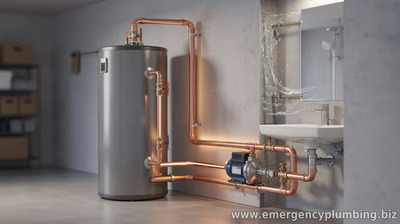
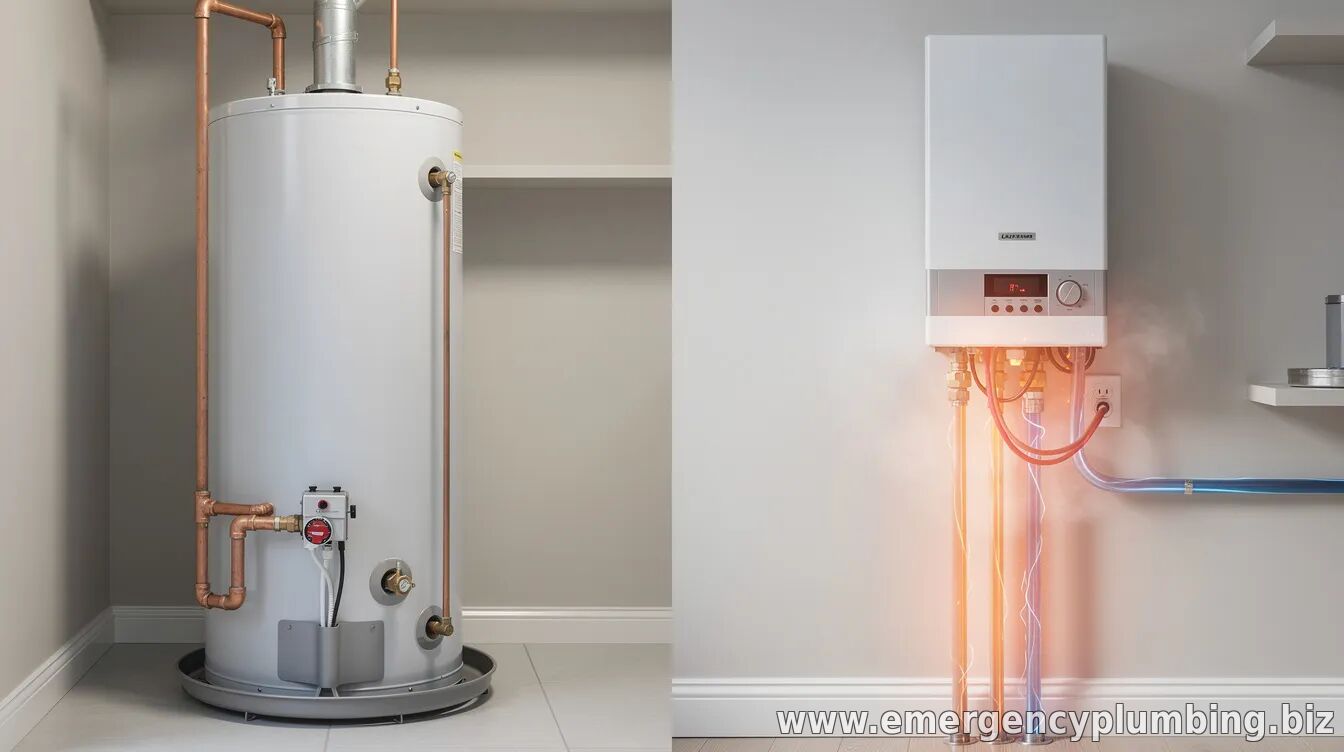
Traditional tank systems store a reservoir of heated water. Once the tank is hot, you can use multiple fixtures in sequence, and the unit continuously recovers to replace what’s been used.
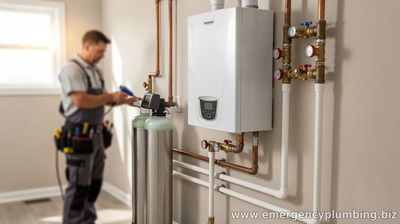
Tankless systems heat water on demand as it flows through the unit. That means there’s no large tank waiting to refill, but the unit’s output has a limit. Homes with high simultaneous demand—like showers running at the same time as a dishwasher and washing machine—may require larger capacity units (or multiple units) to avoid temperature drop. Energy efficiency and operating costs
In many cases, tankless units are more energy efficient because they don’t constantly maintain a large volume of water at a set temperature. Tank heaters can lose heat from the tank and surrounding insulation, which adds to energy use even when demand is low.
However, modern tank models can still be efficient, especially if they use good insulation and are properly sized. Your best choice may come down to how often you use hot water and whether you have long periods of low demand. Space requirements and installation constraints
Tank water heaters require physical space for the tank and adequate clearance for service. In garages, basements, and utility closets, that footprint is often manageable, but in tighter homes it can be a deciding factor.
Tankless units are usually more compact and can be mounted on walls, which can free up floor space. That said, tankless installations may require dedicated gas lines, venting appropriate to the model, and—depending on location—additional electrical upgrades. Maintenance, lifespan, and reliability
Tank water heaters are typically easier to service and replace, and parts are widely available. Maintenance usually involves checking the pressure relief valve and, for many systems, periodically flushing sediment from the tank to improve performance and longevity.
Tankless units also need maintenance—often involving descaling to manage mineral buildup—but the schedule and methods differ by water hardness and manufacturer guidance. Reliability is generally good for both types when installed correctly and maintained, but capacity and water quality matter more for tankless performance over time. Which one is right for your home?
If you have a smaller household, lower simultaneous hot-water use, and you want to minimize upfront cost, a tank water heater may be the straightforward choice. It can also be a good fit if you prefer steady recovery and a simple “turn it on and forget it” approach.
Consider tankless if you want to reduce standby heat loss, you have moderate hot-water demand patterns, and you’re comfortable with a higher initial investment. It can also work well for homes where space is limited—provided the unit size matches your peak usage so you won’t experience delays or temperature swings.
Bottom line: Match the system to your real-world hot-water use. If you’re unsure, look at household size, typical routines, and whether multiple fixtures run at once. A qualified plumber or HVAC contractor can help determine the right capacity (especially for tankless models) and verify that your venting, gas, or electrical setup can support the installation.
| |
⏰ Dispatcher support 24/7
📞 224-754-1984CALL ☎ Subscribe 👆 FORUM 🗣
North Shore, Northwest suburbs of Chicago, IL
Next & Previous posts
Related articles: