

0:16 AM When Trenchless Sewer Repair Beats Full Excavation | |
When a home or neighborhood faces sewer line damage, the default assumption is often “tear it up and replace it.” But for many pipe failures, trenchless sewer repair can offer a faster, less disruptive alternative to full excavation—sometimes with fewer costs tied to restoration of landscaping, driveways, and streets.
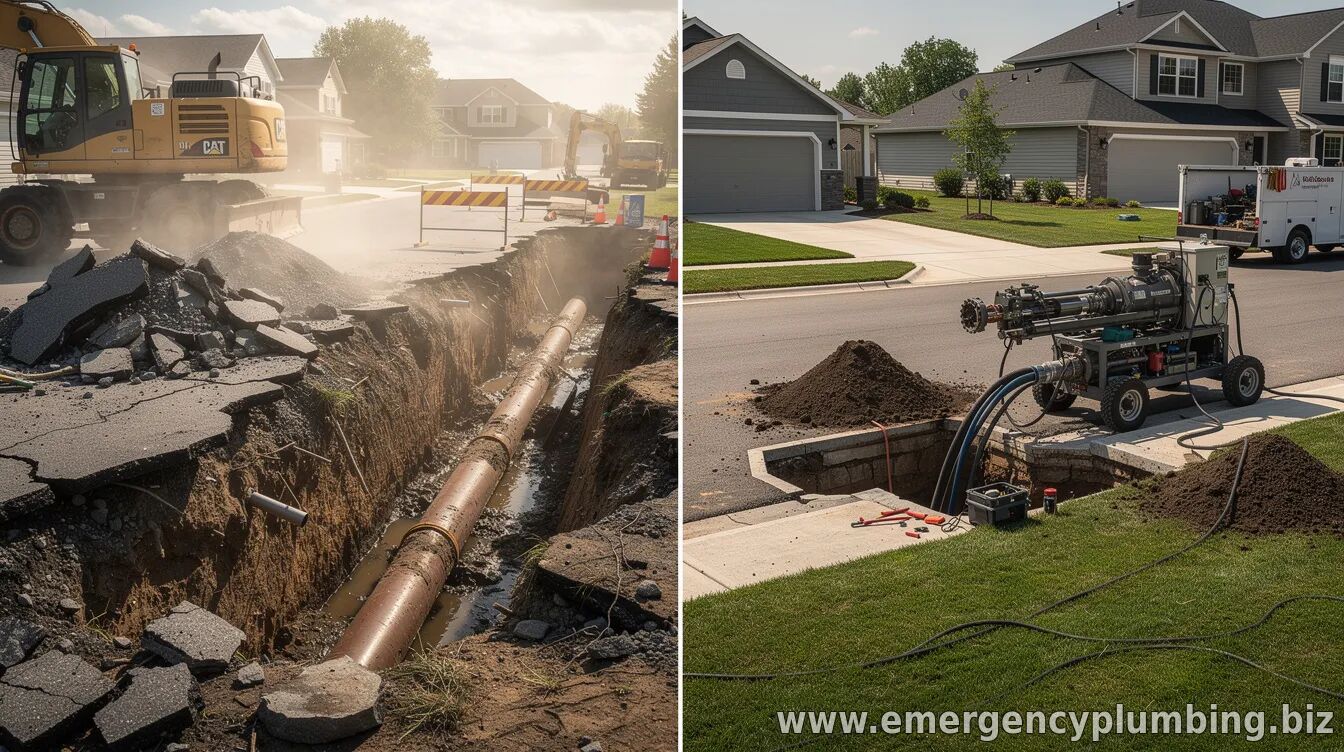
Trenchless techniques are designed to rehabilitate or replace underground pipes with minimal open digging. Instead of exposing long sections of the sewer, crews access the line through small entry points and work below the surface. The result can be a quieter construction experience, fewer traffic interruptions, and a quicker return to normal site conditions. Less disruption to people and property
One of the clearest reasons trenchless sewer repair can outperform excavation is the reduction in visible impact. Full excavation commonly requires extensive digging, soil removal, and reconstruction of pavements and ground surfaces. Trenchless projects typically involve fewer restoration tasks because they excavate only where needed for access shafts or launching/receiving pits.
This advantage is especially meaningful for urban streets, commercial properties, and areas with mature landscaping, finished landscaping, or limited space for heavy equipment staging. Shorter timelines and faster access to “workable” solutions
Time is often the hidden cost in excavation-based repairs. Even when the underground repair is straightforward, restoring everything above the line—concrete, asphalt, grading, and cleanup—can extend schedules. Trenchless sewer repair can compress the overall timeline by limiting how long the site remains under construction and by streamlining restoration work.
For property owners and facilities managing operational downtime (schools, hospitals, retail centers), faster project completion can translate directly into fewer disruptions to tenants, customers, or daily routines. Improved consistency with modern rehab techniques
Trenchless sewer repair is not a single method, but rather a set of approaches that address different failure types. Depending on the diagnosis, contractors may use techniques such as pipe lining (often referred to as cured-in-place pipe) or other rehabilitation options that restore integrity without fully removing the existing line.
In many cases, properly selected trenchless solutions can improve hydraulic performance and extend the service life of aging pipes—particularly when failures are localized or when the overall alignment is still acceptable. Where excavation may still be the better option
Trenchless repair isn’t automatically superior in every scenario. Full excavation can be the preferred choice when the damage is too severe for rehabilitation, when the pipe alignment has failed dramatically, or when there are obstacles that make access and installation impractical. Excavation may also be necessary if the sewer line requires complete replacement due to widespread collapse, complex root intrusion that cannot be effectively addressed through rehab, or site constraints that block trenchless equipment.
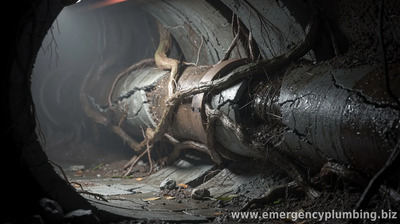
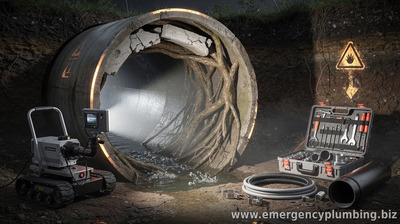
Additionally, the success of trenchless work depends heavily on accurate assessment. A thorough inspection—often using CCTV and additional diagnostics—helps determine whether trenchless methods can reliably restore the pipeline. How to decide: key factors that drive the best outcome
Homeowners, property managers, and municipalities typically benefit from evaluating the problem beyond price alone. A practical decision often comes down to the condition of the pipe, the location, access constraints, and the scope of restoration needed above ground. Many contractors weigh factors such as:
When those conditions align, trenchless sewer repair often emerges as the option that balances engineering needs with real-world practicalities—minimizing downtime and reducing how much a project reshapes the surface.
For anyone facing a sewer emergency or planning long-term line maintenance, the takeaway is straightforward: excavation is sometimes necessary, but trenchless rehabilitation frequently offers a smarter, less disruptive path—provided the underlying diagnosis supports it.
| |
⏰ Dispatcher support 24/7
📞 224-754-1984CALL ☎ Subscribe 👆 FORUM 🗣
North Shore, Northwest suburbs of Chicago, IL
Next & Previous posts
Related articles: