

11:40 PM Storm Drains vs. Sanitary Sewers: Key Differences | |
At a glance, “storm drain” and “sanitary sewer” can look similar—both are pipes and grates that move water away from streets. But they are designed for different types of water, and sending the wrong kind of flow into the wrong system can lead to pollution, flooding, and costly repairs.
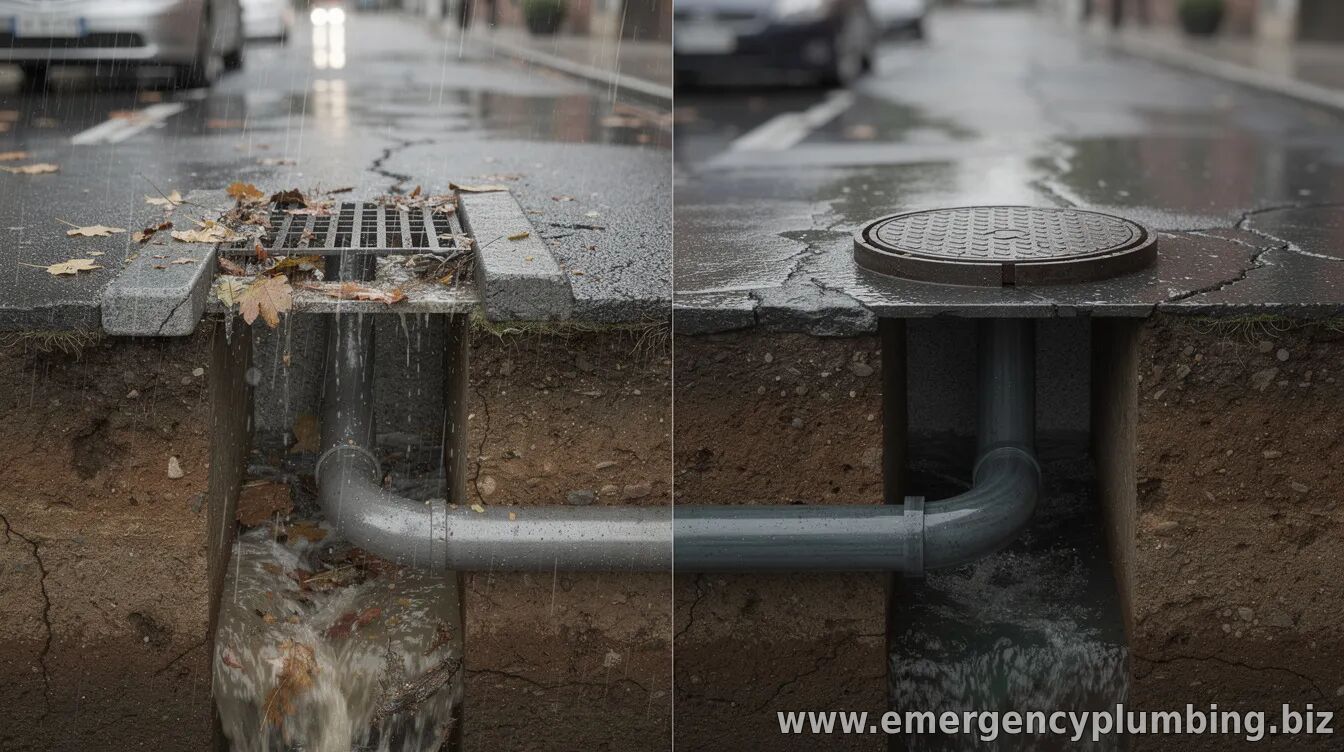
Storm drains are meant to carry rainfall and runoff—think water from storms, melted snow, and surface water that flows across streets, rooftops, and parking lots. Sanitary sewers are built to carry domestic and industrial wastewater from homes and businesses, such as toilet waste, sinks, showers, and certain regulated facility discharges. What each system carries
Storm drainage systems typically move relatively “clean” (though often not truly clean) water to local streams, rivers, lakes, or other drainage outlets. The water can pick up pollutants as it travels—oil from roads, sediment, leaves, litter, and chemicals—so stormwater is still a concern, just handled under a different framework.
Sanitary sewer systems convey wastewater to treatment facilities. Because this flow includes human waste and other contaminants, it requires treatment before discharge. The system is engineered with materials, pipe sizing, and operational controls suited to sewage loads and treatment needs. Where the water goes
In many cities, storm drains discharge directly to surface waters or stormwater management features such as detention ponds, wetlands, or infiltration areas. That’s why rainfall can quickly affect river and creek levels during storms.
Sanitary sewers ultimately feed into a wastewater treatment plant. Treatment is designed to remove pathogens, organic material, nutrients, and other contaminants—processes that aren’t intended for untreated storm runoff. Why mixing them is a problem
When stormwater enters the sanitary sewer system—sometimes through damaged pipes, improper connections, or defects known as inflow and infiltration—it can overwhelm treatment capacity. The result can be basement backups, sewage overflows, and higher treatment costs.
Conversely, connecting sanitary waste to storm drainage can send raw sewage into waterways without adequate treatment. That increases public health risks and can trigger beach or waterway advisories, shellfish closures, and environmental damage. How to tell the difference
Local infrastructure labels and access points are often the clearest clues. Storm drains are commonly marked with language such as “Storm Drain,” “Drainage,” or “No Dumping—Drains to Waterways.” Sanitary sewer access points are more likely to be identified as “Sanitary Sewer,” “Sewer,” or “Wastewater.”
Property owners can also look for the plumbing context: sanitary lines are connected to toilets, sinks, and other internal fixtures, while storm systems connect to gutters, downspouts, yard drains, and exterior inlets. What this means for residents
Even if you don’t manage city pipes, you can help reduce preventable problems. Properly route downspouts and roof drainage away from sanitary lines, keep catch basins clear of debris, and avoid pouring chemicals or waste into storm drains.
For communities, clearer education and better inspection—especially after heavy storms—help ensure the systems remain separated as designed, protecting waterways and reducing the likelihood of overflows and flooding.
| |
⏰ Dispatcher support 24/7
📞 224-754-1984CALL ☎ Subscribe 👆 FORUM 🗣
North Shore, Northwest suburbs of Chicago, IL
Next & Previous posts
Related articles: